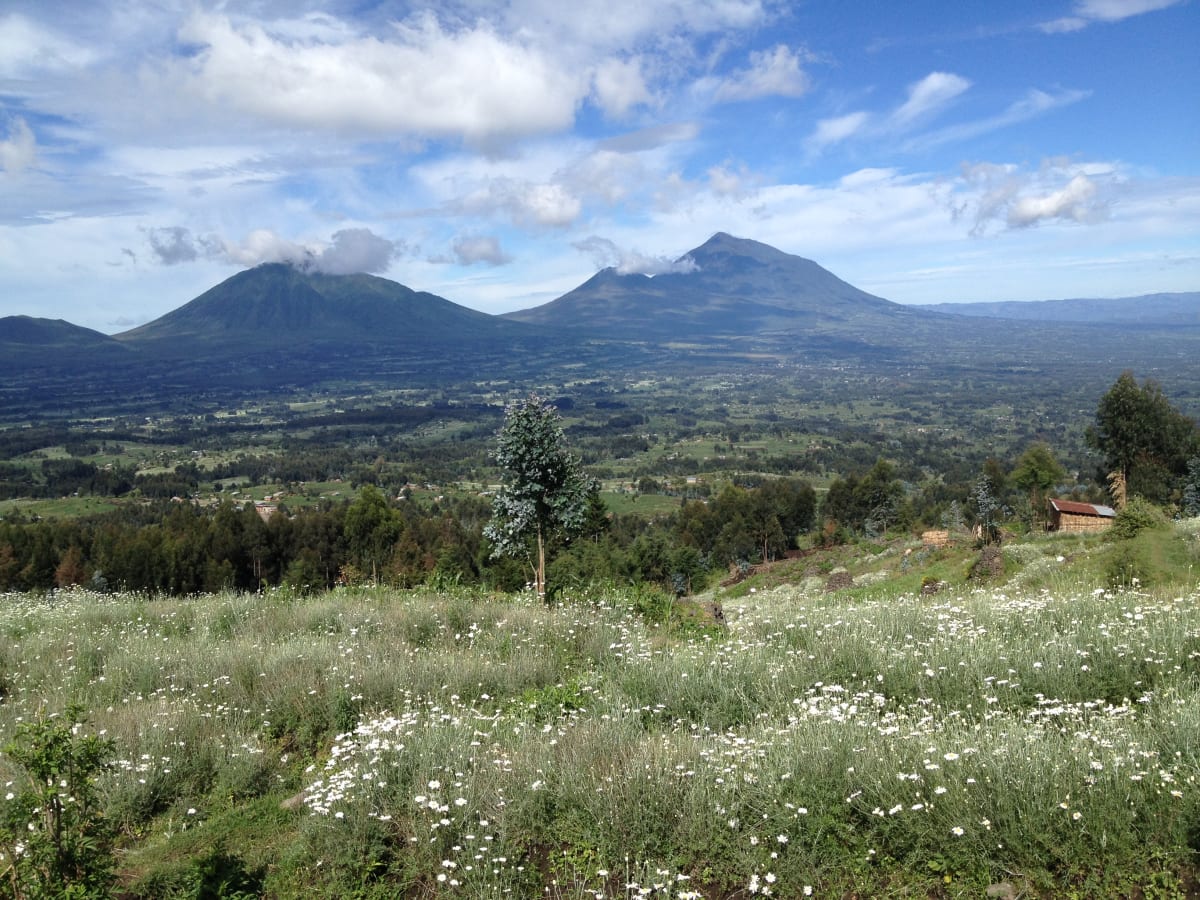
How many gorilla families are in Rwanda? The Rwanda Development Board (RDB) lists ten habituated gorilla families that visitors can trek, all in Volcanoes National Park in the north-west of the country. With groups of up to eight people per family, that gives about 80 gorilla permits a day. Other gorilla groups live in the same forest but are not habituated for tourism, and some families are reserved for research, so the number of families you can actually visit is smaller than the total number of gorillas in the park.
This guide explains what a "habituated" family is, how the ten families are shared out among visitors, why the number can change, and how to make sure your trek is as good as it can be. Figures and family lists change, so confirm them with the RDB or your operator before you book. We checked the details in October 2026. It supports our complete guide to gorilla trekking in Rwanda.

What Does a Habituated Gorilla Family Mean?
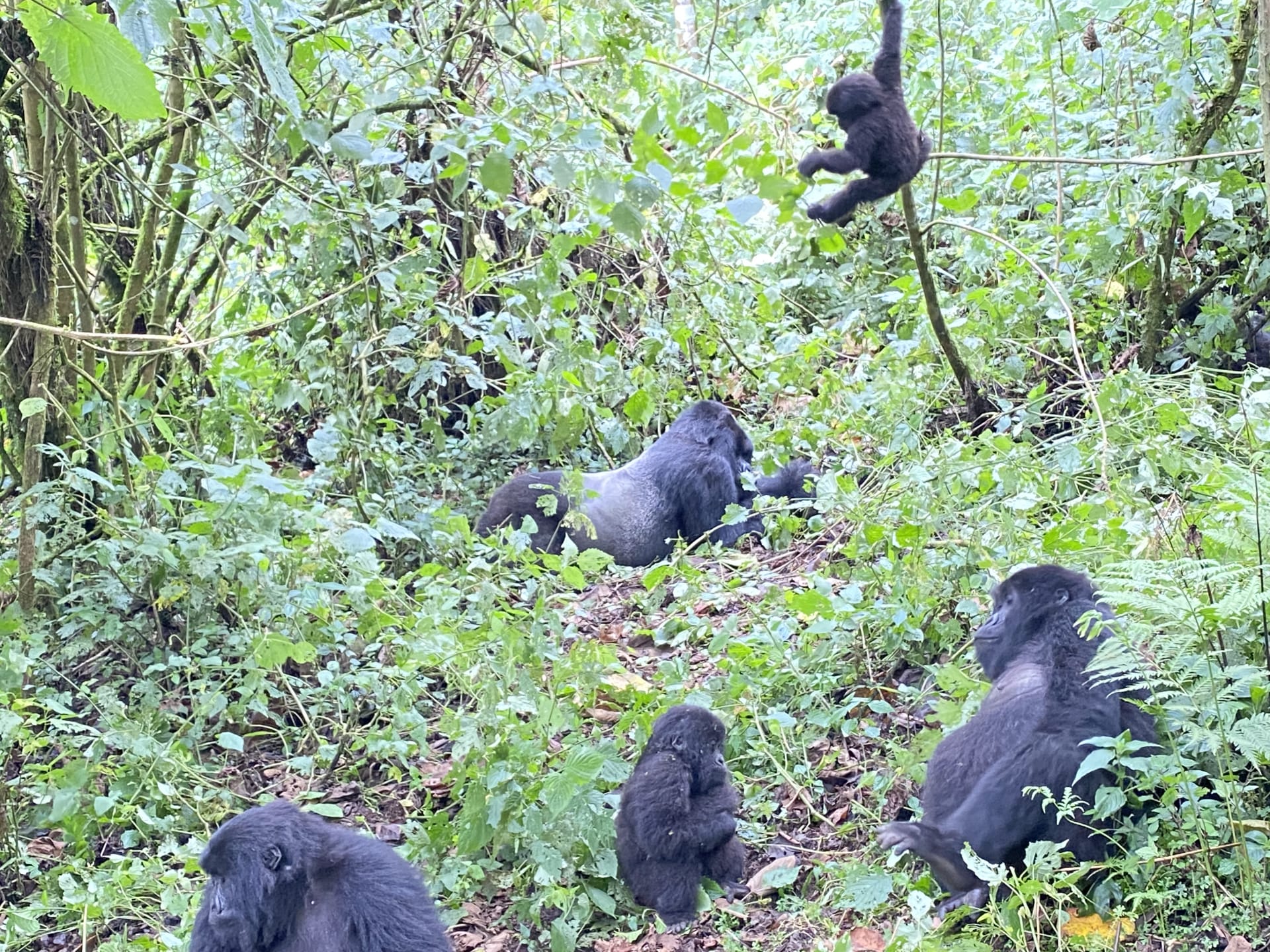
A habituated family is a group of wild mountain gorillas that has spent two or more years getting used to the presence of people, so that a small group of visitors can sit nearby without causing stress. Rangers and trackers do this slowly, by visiting the family every day at a distance that shrinks over time. The gorillas stay wild and free; nothing is fed or restrained. The rest of the gorillas in the Virunga volcanoes are unhabituated and are left alone.
For the science behind how families live, see our article on mountain gorilla family facts.
How Many Permits Are Available Each Day?
One family is visited by one group of up to eight trekkers each day. With ten families open to visitors, that makes up to 80 permits a day for the whole of Rwanda. A permit costs US$1,500 for foreign visitors, according to the RDB. This small number is deliberate. It protects the gorillas, keeps the experience quiet and means permits for July to September sell out early. Learn how to secure a date in how to book gorilla trekking in Rwanda.
Who Decides Which Family You See?
The rangers assign families at the briefing on the morning of your trek. They consider the fitness of each group, the age of the trekkers, any special requests your operator made in advance, and how far each family has moved overnight. You can ask for a family, but you cannot guarantee it. The families do not stay in one place, so a family that was an easy walk last week may be far away today. Read the full explanation in Rwanda gorilla families: which ones can you visit.
Why Does the Number of Families Change?
- Families split. When a young silverback leaves or the group becomes too large, a new family can form.
- New families are habituated. Rangers continue to work with groups that may open to visitors in future.
- Research and monitoring. Some groups are kept for scientific study and are not open to tourists.
- Deaths and births. The size of each family changes through the year.
Because of this, different websites list different numbers, such as 10 or 12. The RDB booking pages, which we use, list ten families open to visitors. Any claim of more should be checked with your operator.
How Many Gorillas Are There in Total?
The mountain gorilla is one of the few great apes whose numbers are rising. The Virunga massif, which includes Rwanda, Uganda and the Democratic Republic of Congo, and the Bwindi forest in Uganda hold the world's remaining wild mountain gorillas. Conservation groups report the population has grown to more than 1,000, with recent surveys noting numbers above that figure. The growth comes from protection, veterinary care and the income from tourism. You can read how this connects to the community in how ecotourism supports conservation and communities in Rwanda.
How Does Rwanda Compare with Uganda?
Rwanda has fewer habituated families than Uganda, but the park is compact, the roads are smooth and many treks are short. Uganda's Bwindi has more families spread across four sectors, and Mgahinga has one. A fuller comparison is in Rwanda vs Uganda gorilla trekking and in how many gorilla families are in Bwindi.
How Can You Get the Best Out of Your Trek?
- Book early so your date is available.
- Tell your operator about your fitness, so they can request a suitable family.
- Arrive at the Kinigi headquarters by 7:00 for the briefing.
- Hire a porter and wear waterproof boots; read the packing list.
- Allow a spare day in case of bad weather.
Our 4-day Rwanda gorilla trekking tour has the schedule built around the early start.
How Do Rangers Decide Which Family Goes With Which Group?
At the briefing, rangers see the group, hear about each person's age and fitness, and consider the requests that operators have made in advance. They also know where each family spent the night, how far it is from the trailhead and how the weather looks. Strong, fast walkers may be matched with families that live higher up the slope, and groups with older travellers or children of 15 usually receive a nearer family. The rule is simple: every family is visited by one group a day, and every group gets one family. Because of that, small changes in availability can shift the assignment, and nobody can guarantee which family you will meet.
What Is the Difference Between a Habituated and an Unhabituated Family?
A habituated family has been visited daily by trackers for two years or more and tolerates the presence of a small, quiet group at a distance of seven metres. An unhabituated family has not, and approaching it could stress the animals or provoke a charge. Gorillas in the unhabituated groups are protected by the park and are monitored from a distance. This is why only the habituated families are open to visitors, and why the number does not change quickly. New families can be habituated, but it takes years, and the programme is slow on purpose.
What Can You Learn From the Names?
Names of families are often drawn from the Kinyarwanda language or from places: Amahoro means peace, Kwitonda means humble and Hirwa means lucky. Some are named after the first silverback to lead the group or after a mountain. Rangers like to explain the stories behind them, so ask your guide on the trail. Names can also change if a family splits, so older guidebooks may list names that are no longer used. Read Rwanda gorilla families: which ones can you visit for the list we use.
How Do Family Numbers Affect Your Choice of Season?
The number of families is the same all year, but demand is not. June to September is the busiest and the most likely to sell out, which leaves little choice. In the wetter months, March to May and October to November, you have a wider choice of dates and may find a better lodge, but the paths are muddier. The RDB also advertises a 30% discount on gorilla permits from November to May for those who add two nights in Akagera or Nyungwe. See how to book gorilla trekking in Rwanda.
Best for
- Travellers planning permits and wanting to understand availability
- Anyone comparing Rwanda and Uganda
May not be ideal for
- Travellers who need to see a specific named family; the rangers cannot guarantee it
What Mistakes Do Visitors Make About Gorilla Families?
- Insisting on one family. Gorillas move daily, so flexibility helps.
- Believing the biggest family is always best. Smaller families can be easier to watch.
- Comparing numbers on different websites. Use the RDB figures.
- Forgetting the one-hour limit. It applies to every family.
Frequently Asked Questions About Gorilla Families in Rwanda
How many gorilla families can you trek in Rwanda?
Ten habituated families, according to the RDB booking pages.
How many people visit each family?
Up to eight visitors for one hour a day.
Are there other gorilla families in Rwanda?
Yes. Unhabituated and research groups live in the forest but are not open to visitors.
Can I choose the family in advance?
You can request one, but rangers assign the family on the day.
Should I confirm the family list and permit rules with the RDB?
Yes. The list of habituated families, the permit price and the discount terms can change, so confirm them with the RDB or your operator for your dates.
Do gorilla families ever cross into other countries?
Gorillas do not recognise borders, and some groups in the Virunga range move between Rwanda, Uganda and the Democratic Republic of Congo. Rangers track them each day.
Planning Your Trip?
Tell us your dates and fitness level. We will request a suitable family and arrange the lodge and transfers. Talk to Our Tour Specialist or look at the 4-day gorilla trek and Dian Fossey hike.
Source: Rwanda Development Board.