
A mountain gorilla family, called a troop, is usually led by one dominant silverback and includes several adult females and their young. The troop moves, feeds and nests together. Mountain gorillas live only in the Virunga volcanoes, which Rwanda shares with Uganda and the Democratic Republic of the Congo, and in Bwindi Impenetrable Forest in Uganda. The last full censuses counted about 1,060 animals in total.
This guide gives the facts you will notice on a trek: how a troop is organised, what gorillas eat, how they communicate and sleep, and why the conservation story matters. It supports our complete guide to gorilla trekking in Rwanda.

How Is a Mountain Gorilla Family Organised?
The silverback leads the troop. He decides when the group moves, where it feeds and how it responds to danger. An adult male is called a silverback because the hair across his back turns silver-grey with maturity. The troop also includes adult females, who are often not close relatives, and their offspring. Some troops contain more than one adult male, and younger males may stay and wait for a chance to lead, or leave to start their own group.
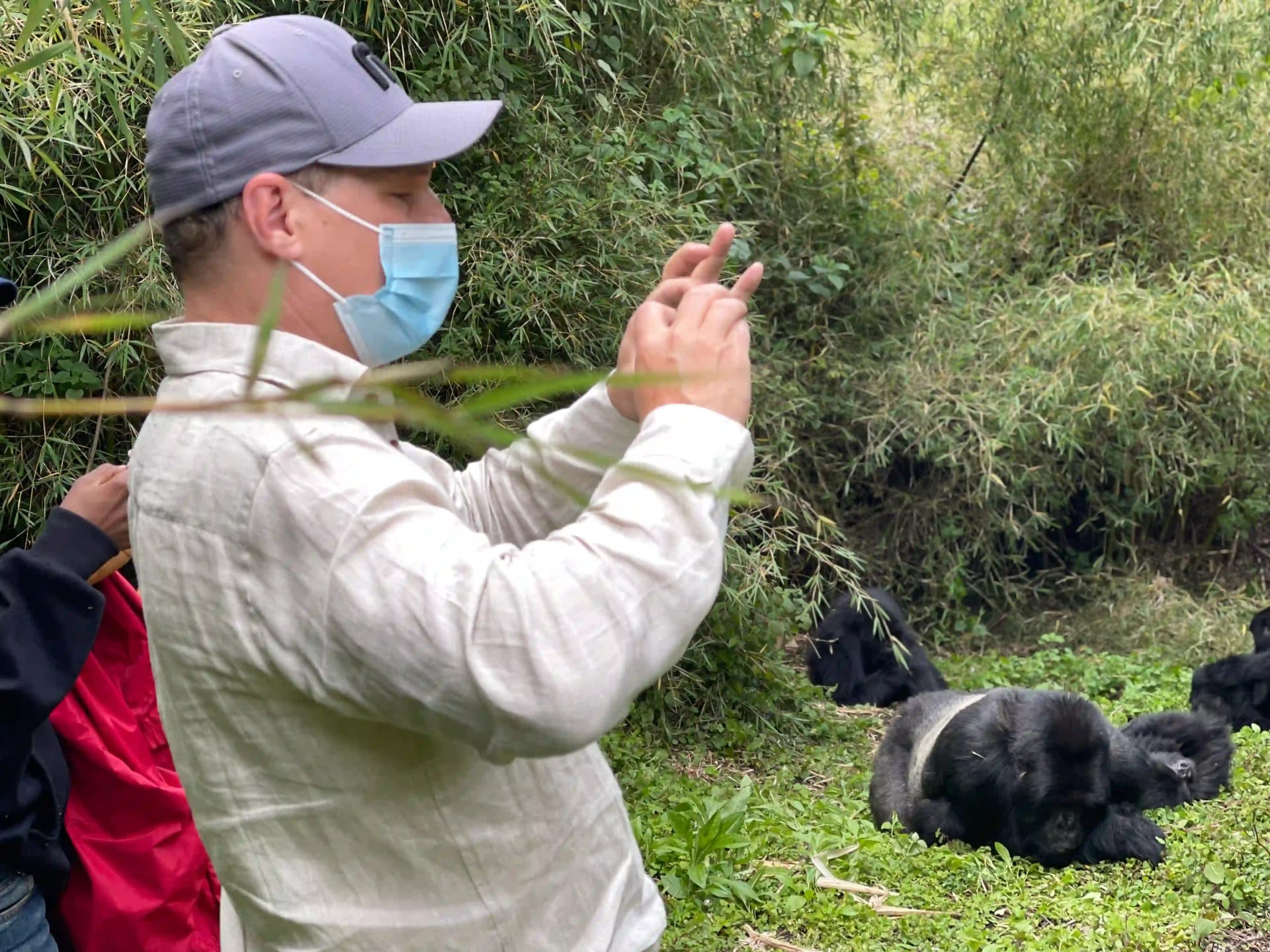
Females raise the young, and the silverback protects them. This is why rangers allocate groups to a family with care and why visitors stay at least 7 metres away.

How Do Mountain Gorillas Communicate?
Gorillas use a range of calls, including barks, grunts and hoots, as well as facial expressions and body posture. Researchers have recorded many different vocalisations. A silverback may beat his chest to show strength or to warn a rival. Grooming is also important, because it strengthens bonds inside the troop. On a trek, you may hear a low rumbling sound, which is often a sign that the group is content and feeding.
Where Do Gorillas Sleep, and What Do They Eat?
Every evening a gorilla builds a new nest out of leaves and branches, usually on the ground and sometimes in a low tree. Infants share their mother's nest. Trackers use fresh nests to find the family the next morning, which is one reason the length of your walk varies.
Mountain gorillas are herbivores. They eat leaves, stems, shoots, bamboo, roots and bark, plus some fruit and flowers when they find them. An adult male can eat up to about 27 kilograms (60 pounds) of vegetation in a day, according to the Dian Fossey Gorilla Fund.

How Long Do Gorillas Live and How Are Young Raised?
In the wild, mountain gorillas typically live into their late 30s or early 40s. A female is pregnant for about eight and a half months and gives birth to a single baby, usually once every four years or so. An infant nurses for around three years and stays close to its mother. The silverback is protective of the youngest members of the troop.

What Is Special About a Gorilla's Nose?
Each gorilla has its own pattern of wrinkles around the nose, like a fingerprint. Researchers and trackers use these patterns to tell individuals apart, and rangers know the members of each habituated family by sight.

Why Are Mountain Gorillas So Vulnerable to Human Illness?
Gorillas share about 98 per cent of their DNA with humans and catch our respiratory infections easily. That is why visitors keep at least 7 metres away, do not trek with a cold and wear a mask if rangers ask. The park rules protect the animals, not just the visitor experience.

How Many Mountain Gorillas Are Left?
The last full censuses, in the Virunga volcanoes in 2015 and in Bwindi in 2018, counted about 1,060 mountain gorillas together. About 604 were in the Virunga volcanoes. In 2018 the IUCN moved the species from Critically Endangered to Endangered, because numbers had grown. A new census began in Bwindi in 2025, and we will update this article when official figures are published. Their habitat is small and surrounded by farmland, so pressure on the forest grows as the population does.
Gorilla tourism helps. Permit income pays for rangers and trackers, and a share of park revenue goes to nearby communities. Read how in how ecotourism is changing Rwanda and in the Volcanoes National Park guide.
Best for
Readers preparing for a trek, families whose teenagers want to understand what they will see, and anyone interested in the conservation story.
May not be ideal for
Readers looking for a trekking cost or permit guide. For those, read how much gorilla trekking costs in Rwanda and how to book a permit.

What Do Visitors Often Get Wrong About Gorilla Families?
- Thinking they are tame. The families are habituated, not domesticated. They are wild animals and rangers control every encounter.
- Expecting a fixed spot. The family moves every day, so the walk to find them changes.
- Expecting to see the whole troop. Some members stay hidden in vegetation.
- Expecting to touch them. Touching is forbidden, even if a young gorilla comes close.
Frequently Asked Questions About Mountain Gorilla Families
How many mountain gorillas are there in the wild?
About 1,060 were counted in the last full censuses, in 2015 and 2018. A new Bwindi census started in 2025.
Why do gorillas build nests every night?
They build a fresh nest of leaves and branches each evening for warmth and comfort. Infants sleep in their mother's nest.
Can tourists see a whole gorilla family?
You visit one habituated family for one hour. You usually see several members, but not always the whole troop.
Why must visitors keep a distance from gorillas?
Gorillas catch human illnesses easily, so the rules keep visitors at least 7 metres away.
Planning Your Trip?
If you would like to meet a gorilla family, tell us your dates and what else you want to see, and our tour specialist can design a private or small-group route. See the 4-day Rwanda gorilla trekking tour or Talk to Our Tour Specialist.


