Make The Most Of Your Time With Nyungwe Forest
Nyungwe National Park protects one of Africa’s oldest mountain rainforests, a wide green island of biodiversity stretching over 1,000 square kilometres in Rwanda’s southwest. Here, thirteen primate species call from the canopy, and more than 300 bird species move through the trees.
It is a place people visit for chimpanzee trekking, the famous canopy walk and high altitude hiking, but remember for the quiet details: the smell of wet earth, tea fields glowing at sunset, and the sound of colobus monkeys.
As you start planning, it helps to have a Nyungwe National Park travel guide that goes beyond headlines and gives you honest, practical detail. This guide brings together up to date park costs and fees, the best time to visit, and things to do , so you can know how to enquire to your tour operator for designing a trip that actually fits your interests and budget.
Whether you love primates, birding, long hikes or only want a deep rainforest escape after mountain gorilla trekking, Nyungwe adds a very different chapter to a Rwanda tour. And with good planning, you can avoid surprises, make the most of your time, and step into the forest already knowing what to expect.

Why Nyungwe National Park feels different
Nyungwe is not a classic “savannah safari” destination. There are no lion filled plains here; instead you are engaged in an ancient montane rainforest that has survived ice ages, regional conflict and logging pressure.
The forest sits between about 1,600 and 2,950 metres above sea level, which means cool temperatures, misty mornings and rich plant life more than 1,000 plant species, 75 mammals and a remarkable list of orchids and giant lobelias. This is also one of the best places in East Africa to focus on primate safaris other than mountain gorillas: chimpanzees, Angolan colobus, L’Hoest’s monkeys and several other species all share these hills.
For many travellers, Nyungwe offers three big things at once: a real sense of wilderness, accessible activities that don’t require technical hiking skills, and high quality lodges overlooking tea plantations and rainforest. You get adventure, comfort and conservation impact in one stop.
Where Nyungwe is and how to get there
Nyungwe National Park lies in Rwanda’s southwest, and not far from Lake Kivu. From Kigali, it’s roughly 220 to 230 kilometres by road, usually a five to six hour drive depending on stops and traffic.The journey is part of the experience: terraced hills, small towns, market stalls and tea covered slopes build a picture of rural Rwanda long before you reach the forest itself.
Most visitors travel in a private 4×4 vehicle with an expert driver guide, which allows flexibility for photo stops and lunch along the way. It’s also possible to combine a short domestic flight to Kamembe (near Rusizi) with a shorter road transfer to the park.
Roads are paved but winding. If you get motion sickness, bring medication and request front seats. Because the park’s activities start early in the morning, it’s best to arrive the day before your first trek (your tour operator will organize all logistics and accomodations for the best experience).
Best time to visit Nyungwe National Park
Nyungwe is a true rainforest, so you should expect some rain in any month. That said, there are patterns that can help you choose the best time to visit Nyungwe National Park for your style of travel.
The drier seasons around June to September and December to February, usually bring more stable weather, clearer views on the canopy walk and less slippery trails. If you prioritise long hikes, photography on ridges and generally easier walking conditions, these months are ideal.
The wetter periods, March to May and October to November can be superb for certain activities, especially chimpanzee trekking. During these months, fruiting trees are more abundant, so chimps may stay in smaller areas and can sometimes be easier to find. The forest looks especially lush, and birding is often excellent, but expect muddier trails and bring serious rain gear.
Unlike some wildlife destinations where animals migrate away, Nyungwe is rewarding year round. If your wider Rwanda itinerary includes gorilla trekking or a classic savannah safari in Akagera, your tour operator can help balance seasons so each stop still works well.
Top things to do in Nyungwe National Park
This Nyungwe National Park travel guide wouldn’t be complete without walking you through the activities that actually define your days in the forest.
1. Chimpanzee trekking in Nyungwe & Cyamudongo
Chimpanzee trekking is the headline experience in Nyungwe. Two main habituated communities are available to visitors: a larger group in Nyungwe Forest itself and another group in the smaller Cyamudongo Forest, a separate fragment about an hour away by road.
Treks start very early, often with a briefing at dawn, because chimps are most active in the cool morning hours. After the briefing, small groups (maximum eight travelers per troop) follow ranger guides into the forest, tracking calls and fresh signs such as nests and broken branches.
Terrain can be vertical and muddy, and the trek can last three to four hours depending on where the chimps spent the night. Once you find them, you usually have up to one hour in their presence; watching them feed, groom each other, or crash noisily through the trees. Age limits are normally 15+ for conservation and safety reasons.
To prepare, bring sturdy hiking boots, long trousers, a waterproof jacket, day pack, at least one litre of water and a sense of patience. A walking stick and porter (for a small additional fee) are well worth it if you’re not used to hiking in wet conditions.

2. Nyungwe canopy walk experience
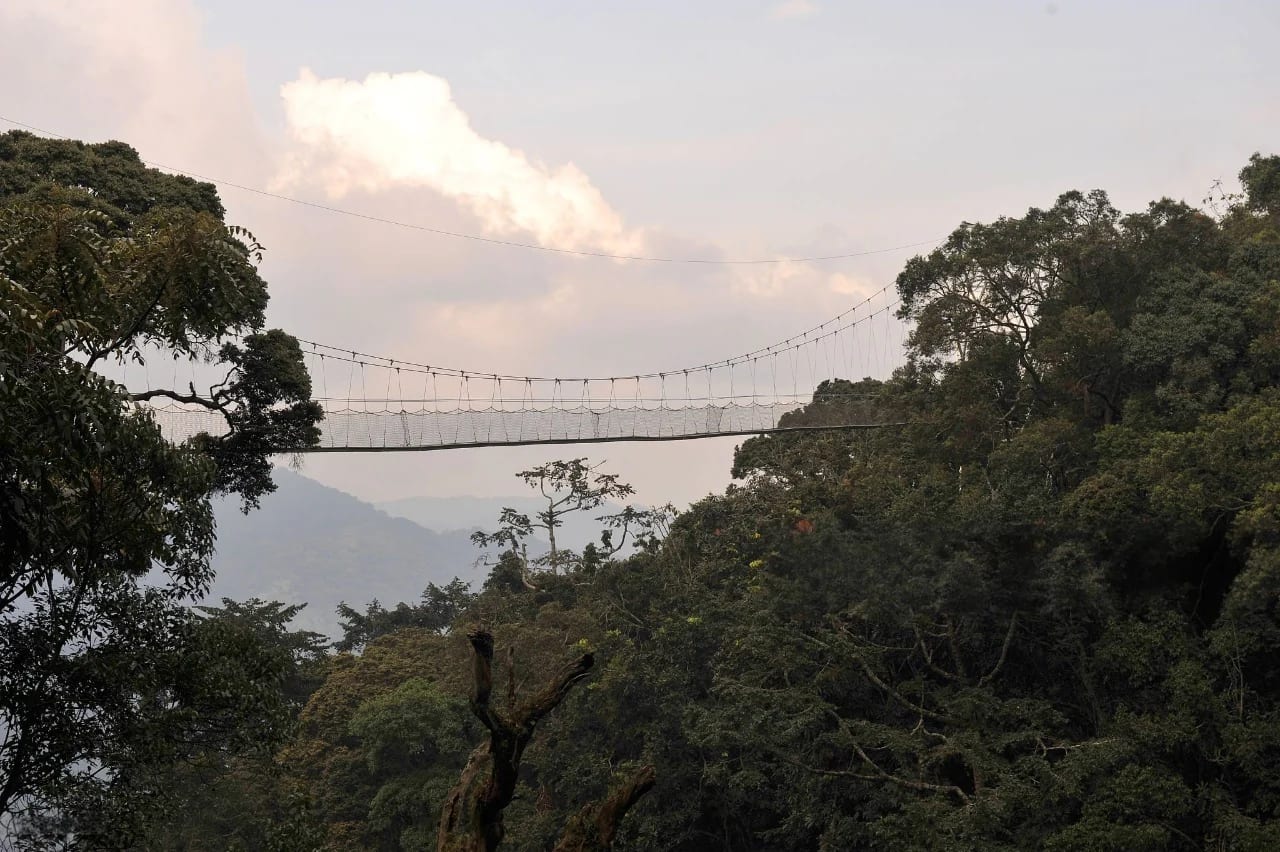
The Nyungwe canopy walk is one of the most photographed experiences in Rwanda and for good reason. A suspension bridge hangs about 60 to 70 metres above the forest floor, allowing you to walk at canopy level with wide views over the ridges.
The walkway itself is around 160 metres long, divided into several sections connected by viewing platforms. You reach it via a moderately challenging forest trail from Uwinka Visitor Centre, usually taking about two hours round trip including the walk.
On a clear day, you can look down on tree ferns, towering mahogany, and, if you’re lucky, spot black and white colobus monkeys or blue monkeys moving through the branches below. Bird sightings are common too, especially turacos and sunbirds.
If you’re nervous about heights, know that the bridge feels stable and is well maintained, but it still sways gently. Many people find that focusing on the horizon rather than the drop makes it much easier.
3. Colobus monkeys and other primate walks
Beyond chimps, Nyungwe is famous for its large troops of Angolan colobus monkeys. In some areas, groups of dozens of colobus move together, their long black and white coats flowing as they leap across branches.
Guided colobus or primate walks are generally shorter and less demanding than chimp treks. They’re a great option if you want more relaxed wildlife viewing or if you’re travelling with older relatives who may not want a long, steep hike. You may also encounter L’Hoest’s monkeys, owl faced monkeys, vervet monkeys and other species along the trails.

4. Hiking trails and rainforest waterfalls
Nyungwe is linked with well marked hiking trails of different lengths and difficulty levels. The Isumo Waterfall Trail is one of the most popular, taking you through fern filled gullies to a powerful waterfall hidden in the forest.
Shorter circuits like the Igishigishigi Trail offer canopy level viewpoints without extreme climbs, while longer options such as the Bigugu Trail or sections of the Congo Nile Trail appeal to keen hikers looking for full day challenges.
Because trails can be muddy and occasionally steep, a reasonable level of fitness helps, but you don’t have to be an athlete. The key is to choose routes that match your ability and allow enough time so you’re not rushing.

5. Birdwatching in an Albertine Rift hotspot
Birders often describe Nyungwe as one of East Africa’s finest forest birding destinations. More than 300 bird species have been recorded here, including many Albertine Rift endemics such as the Ruwenzori turaco and handsome francolin.
Guided birding walks focus on forest edges, swampy clearings and ridge viewpoints where you can scan the canopy. Even if you’re not a dedicated birder, you’ll likely notice the park’s colourful turacos, as well as a variety of sunbirds, robins and flycatchers. Morning and late afternoon light add extra drama to photographs.

6. Tea plantations & community experiences
On the edges of Nyungwe, especially around Gisakura, emerald tea fields roll away from the forest line. Several tour operators including Swift Africa Safaris can arrange visits to tea plantations where you can learn how leaves are picked and processed, and sometimes try your hand at plucking.
Community based tourism experiences are growing too. These might include visiting local villages, trying traditional banana beer, watching dance performances or learning about beekeeping project started by Swift Africa Safaris and small scale farming. Done responsibly, these visits help channel tourism income into neighbouring communities and deepen your understanding of life around the park.

Nyungwe National Park Costs & Park Fees
Prices can change, but the figures below give a realistic picture of current Nyungwe National Park costs for international visitors. Always confirm with your tour operator for update tariffs periodically.
Nyungwe costs at a glance (per person)
-
Park entry (day visitor, international): around US$100 per day, with reduced rates for multi-day stays.
-
Chimpanzee trekking permit: about US$150 for international visitors; this includes your guide and the park entry for that day.
-
Canopy walk: about US$40 for international visitors, plus park entry if not already covered by another activity.
-
Other guided hikes, birding and primate walks: generally around US$40 per activity for international visitors.
-
Local freelance guides and porters: roughly US$10–25 per day depending on whether you hire a porter.
For accommodation, budget guesthouses around Nyungwe often start from roughly US$40–80 per room per night, midrange lodges from around US$150–300, and highend properties can exceed US$1,000 per room when booked on an all inclusive basis.
If you’re working with a professional tour company, they will usually wrap park fees, transport, guiding, accommodation and most meals into one per person package price. For a 2 to 3 night Nyungwe extension from Kigali, many travelers should expect a starting budget in the region of several hundred to over a thousand US dollars per person, depending on group size, lodge level and whether chimp permits are included.
Practical Tips for Your Nyungwe National Park Trip
Packing for Nyungwe is a little different from packing for a savannah safari. Instead of worrying about dust, you’ll be preparing for moisture, mud and cool evenings. At a minimum, bring sturdy waterproof hiking boots, long lightweight trousers, moisture wicking shirts, a warm layer for early mornings, and a reliable rain jacket. Gaiters can be helpful in the rainy season.
Weather can be surprisingly cool at altitude, especially at night, so a down jacket is very useful even in “dry” months. Daytime temperatures in the forest are generally comfortable rather than hot, which makes hiking more pleasant.
Mobile coverage exists around some lodges and along main roads but may fade once you’re deep inside the forest. Many lodges offer Wi-Fi, though speeds can vary. If you need to stay in touch, consider purchasing a local SIM card in Kigali before travelling south.
Payment-wise, park fees and permits are usually handled in advance by your tour operator. In lodges, US dollars and major cards are commonly accepted, but having some Rwandan francs is useful for tipping porters, buying snacks in local shops or stopping at roadside fruit markets.
Finally, remember that Nyungwe is primarily a conservation area. Stick to designated trails, keep a respectful distance from wildlife, avoid loud noises and never feed animals. The forest feels wild precisely because it has been protected each responsible visitor helps keep it that way.
Frequently Asked Questions About Nyungwe National Park
How many days do you need in Nyungwe National Park?
For most travelers, two to three nights works well. That usually allows time for one chimpanzee trek, the canopy walk and at least one additional activity such as a waterfall hike or colobus monkey walk. If you’re a keen birder or hiker, adding an extra day gives you more flexibility if weather affects one of your outings.
Is Nyungwe National Park safe to visit?
Nyungwe is considered a safe destination and is managed by African Parks in partnership with Rwanda Development Board, with structured ranger presence and clear safety protocols. As with anywhere, follow your guide’s instructions, stay on marked trails and keep valuables secure at your lodge rather than carrying them on hikes.
Can you combine Nyungwe with gorilla trekking and Akagera?
Yes. Many travelers design a Rwanda itinerary that starts with Kigali, continues to Nyungwe for rainforest and primates, then heads north to Volcanoes National Park for gorillas and east to Akagera for savannah and big game. Distances are manageable by road, and a good operator can link everything into one seamless circuit.
What should you pack specifically for chimpanzee trekking?
For chimps, think about protection and comfort: long trousers, long sleeved top, waterproof jacket, strong hiking boots with good grip, thin gardening gloves for holding branches, a small backpack, snacks and at least one litre of water. If you use a camera, consider a rain cover or dry bag because showers can arrive quickly. Walking poles or a hired stick help on steep, muddy sections.
Is Nyungwe suitable for families?
Nyungwe can be wonderful for older children and teens who enjoy hiking and wildlife. However, age limits of around 15 years apply for chimpanzee trekking and some primate walks, so families with younger children may prefer shorter hikes, tea plantation visits and gentle birding walks. Many lodges can arrange flexible activities so different family members can choose what suits them.
Do you always need a guide in Nyungwe?
Yes. All activities inside Nyungwe National Park are guided, from short walks to full day hikes and chimpanzee trekking. This is partly for safety in dense forest terrain and partly to protect wildlife and habitats. The upside is that you gain local knowledge about plants, birds and conservation that you’d miss if you were alone.
Ready to plan your Nyungwe adventure?
If you’re ready to turn this Nyungwe National Park travel guide into a real trip, contact us now and let start by securing permits, choose lodges, arrange private transfers and integrate Nyungwe with gorilla trekking, Akagera or neighbouring countries like Uganda and Tanzania if they are on the list of your things to do.