You can experience Rwandan coffee from farm to cup in three areas: the hills around Lake Kivu, the countryside around Kigali and the southern highlands near Huye. A good tour follows the coffee from the plantation to the cup: you walk among the trees, see how cherries are picked and sorted, visit a washing station where the beans are processed and dried, and finish with a roast and a tasting. It takes a few hours and fits easily into a Rwanda trip, especially around Lake Kivu.
This guide explains the regions, what the tour covers, the best season and how to choose a visit that is more than a tasting.
Why Is Rwandan Coffee Worth Visiting?
Rwanda grows arabica coffee, mostly of the bourbon type, on small farms at altitudes of roughly 1,500 to 2,000 metres, where cool nights and rich volcanic soil slow the ripening of the cherries. Most coffee is grown by smallholders who belong to cooperatives, and the cherries are processed at washing stations near the farms. The country built its reputation on specialty coffee in the 2000s, and its coffees are known for bright acidity, sweetness and floral notes.
A visit lets you meet the people who grow it and understand why the cup tastes the way it does. It is also a way to support rural communities directly.
Which Regions Can You Visit?
Lake Kivu: Rubavu, Karongi and Rutsiro
The hills above the lake have steep coffee farms and washing stations with views of the water. It is the most popular area for visitors, because it combines easily with a lakeside stay or the Congo Nile Trail. Tours here often include a walk on the hillside and a stop at a station. Read the best things to do on Lake Kivu.
Around Kigali
Some operators offer a short coffee outing from Kigali, a half-day tour that includes a farm visit, a demonstration and a roast. It suits travellers with only a day in the capital. Read the Kigali city tour guide for what else fits into the day.
The southern highlands near Huye
The south has some of the country's best-known coffee areas, and visits there tend to be quieter. They fit a route between Nyungwe and Kigali, or a stop at the national museum in Huye.
What Does a Farm to Cup Tour Cover?
A full tour follows the coffee through each stage:
- Plantation. A guided walk through the trees, with an explanation of varieties, shade and soil.
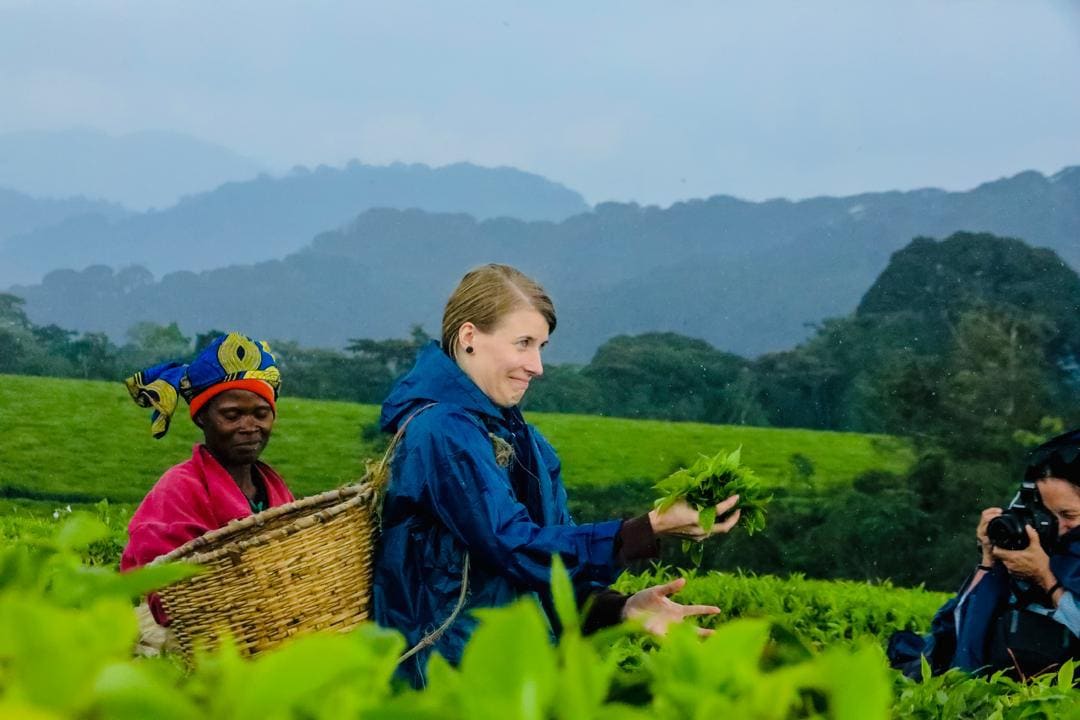
- Picking. In the season, you can pick ripe red cherries and learn why only ripe fruit is chosen.
- Washing station. You see the sorting, the removal of the fruit, the washing and the fermentation.
- Drying. Beans dry on raised beds in the sun, and workers turn and sort them by hand.
- Roasting. A small roast, often over charcoal or in a small drum, and the grinding.
- Tasting. You brew and taste the coffee, usually with a local snack.
When Is the Best Season?
The main harvest runs from about March to July, with the peak in April and May. Washing stations are busiest then, and you can watch the whole process. Outside the harvest, you can still visit farms and tasting rooms, though the stations are quiet. Tours in the rainy season are muddier, and the countryside is green. Choose the harvest if you want to see the process at its busiest, and the dry months if you want clear views of the lake.
How Long Does a Visit Take, and How Do You Fit It In?
A farm visit takes two to four hours, and a full tour with a roast takes half a day. It fits well on a day between treks, on the way from Volcanoes National Park to Lake Kivu or as a short outing from Kigali. A two-day coffee trip around Lake Kivu goes deeper, with an overnight stay in a village. Our 14-day East Africa trip beyond the safari begins with a Kigali food and coffee experience, and the 5-day Rwanda gorilla trekking, golden monkeys and culture can be extended with a coffee visit.
How Do You Choose a Good Coffee Tour?
Ask these questions before you book: Is the tour hosted by a cooperative or farm that grows the coffee? How many people are in a group? Do I see the washing station, and not just the shop? Who benefits from the fee? Is there a tasting at the end? A good tour is led by someone who knows the farmers and answers questions. A poor one is a stop in a shop with a short talk. Read how to experience Rwanda like a local for the same method.
What Makes Rwandan Coffee Taste the Way It Does?
Taste starts with altitude, soil and variety. At high altitude, cherries ripen slowly, which develops sugars and acids. Volcanic soils are rich in minerals. The bourbon variety, common in Rwanda, gives sweetness and floral notes. Processing then shapes the cup: washed coffees, the usual style, are clean and bright, while natural coffees, dried with the fruit on, are fruity and rounder. Roasting and brewing complete the story. Tasting at a washing station lets you compare the stages, and it often changes how people think about coffee at home.
Who Does the Work, and How Are Farmers Paid?
Most Rwandan coffee is grown on tiny plots of less than a hectare by families who belong to cooperatives. Women do much of the picking and sorting. The cooperative or a washing station buys cherries, pays farmers at a price that varies with quality and the market, and sells the processed beans. Better prices go to farmers who deliver ripe, clean cherries. A visit lets you meet the people behind the cup and ask about their work. Choose tours that explain how the farmers are paid and that visit cooperatives, not only commercial estates.
What Is Coffee Culture Like in Rwanda?
Rwanda's own coffee culture is growing, especially in Kigali, where small cafes serve local beans and brew them carefully. Many roasters offer cuppings and workshops. Local people drink more tea than coffee, but coffee is increasingly part of city life. A visit to a cafe in the capital is a pleasant way to end a farm tour, and it shows the full journey from bean to cup. Read the Kigali city tour guide for places to include.
How Do You Bring Coffee Home?
Buy beans, roasted or green, from the cooperative or a roaster, in sealed bags. Check the rules for bringing food products into your country, since some limit coffee or require packaging. Store beans in an airtight container away from light and heat, and grind them just before brewing. Roasted coffee tastes best within a few weeks. A bag of Rwandan beans is a small souvenir that supports the farmers, and it keeps the memory of the trip alive.
Who Will Enjoy the Experience Most?
Idéal pour
- Coffee lovers and curious food travellers
- Travellers who want a gentle activity between treks
- Families with children who like to see how things are made
Peut ne pas être idéal pour
- Visitors with no time for a half-day outing
- Travellers who dislike hills and mud in the rains
Quelles erreurs les visiteurs commettent-ils ?
- Choosing a shop tasting. The farm is the point.
- Visiting outside the harvest with high expectations. Stations are quiet.
- Wearing sandals. Farms are steep and muddy.
- Not buying beans from the cooperative. It supports the farmers.
Frequently Asked Questions About Rwandan Coffee Tours
Can I buy coffee to take home?
Yes. Buying from the cooperative is the best way to support the growers.
Is it suitable for children?
Yes. Children enjoy picking cherries and watching the roast.
How much does it cost?
Prices vary by tour. We quote it with the rest of the trip.
Do I need to book ahead?
Yes for the harvest. We arrange it with your route.
Can children join a coffee tour?
Yes. They enjoy picking cherries and watching the roast, and the walk is gentle.
Is a coffee tour possible in the rainy season?
Yes, but the harvest is quieter and the hills are muddy. Plan the main season for the busiest washing stations.
Planifiez votre voyage ?
Tell us your dates and the area you are visiting, and we will add a coffee visit that fits. Talk to Our Tour Specialist, or see the Rwanda destination page.