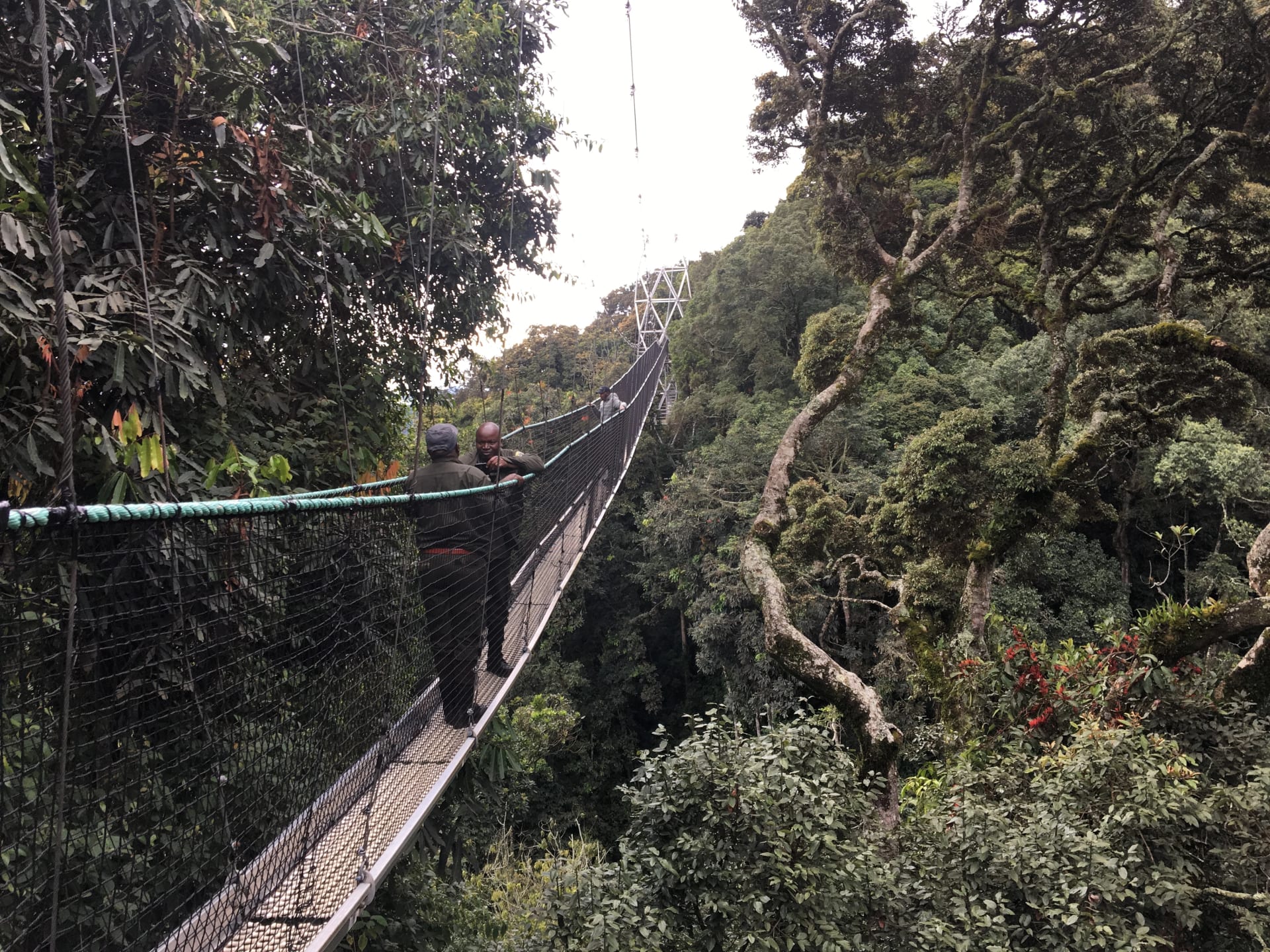
The Nyungwe canopy walk is a suspension walkway that takes you out over the treetops of one of the oldest rainforests in Africa. You walk to it along a forest trail with a guide, cross it in a small group, and come back the same morning. Booking is simple, but the details around it decide whether the day goes well: where you sleep, when you start, what you wear and how you cope with a narrow bridge that moves.
This guide takes you through the booking, the trail, the crossing and the practical points that first-time visitors ask about.
How Do You Book the Nyungwe Canopy Walk?
The walk is booked in advance for a named date and time, and groups are small, so a place on the morning you want is not guaranteed if you wait until you arrive. Most visitors book through the operator who arranges the rest of the trip, because the walk depends on the lodge, the driver and the other activities in the park. To book, we need your names, the dates you plan to be in Nyungwe, and the number of people. We confirm the booking in writing, with the meeting time and the fee.
If you travel in the busiest months, June to September and December to February, ask for the date early. The cost is explained in our guide to the Nyungwe canopy walk cost.
How Do You Get to the Canopy Walk?
The walk starts from the Uwinka reception area, inside the park. Nyungwe is in south-west Rwanda, and the drive from Kigali takes five to six hours, depending on traffic and the number of stops. Most travellers break the journey with a night near Lake Kivu or in the forest itself. Others fly or drive from Kigali on the day before, sleep near the park and start early. A day trip from Kigali is possible on paper, but you would spend most of the day on the road for a morning walk.
The smoother way is to place Nyungwe on a longer Rwanda route. The 7-day Rwanda primate safari joins the canopy walk with gorillas and chimpanzees. For a lakeside break on the way, see the best things to do on Lake Kivu.
What Happens on the Day?
The briefing and the trail
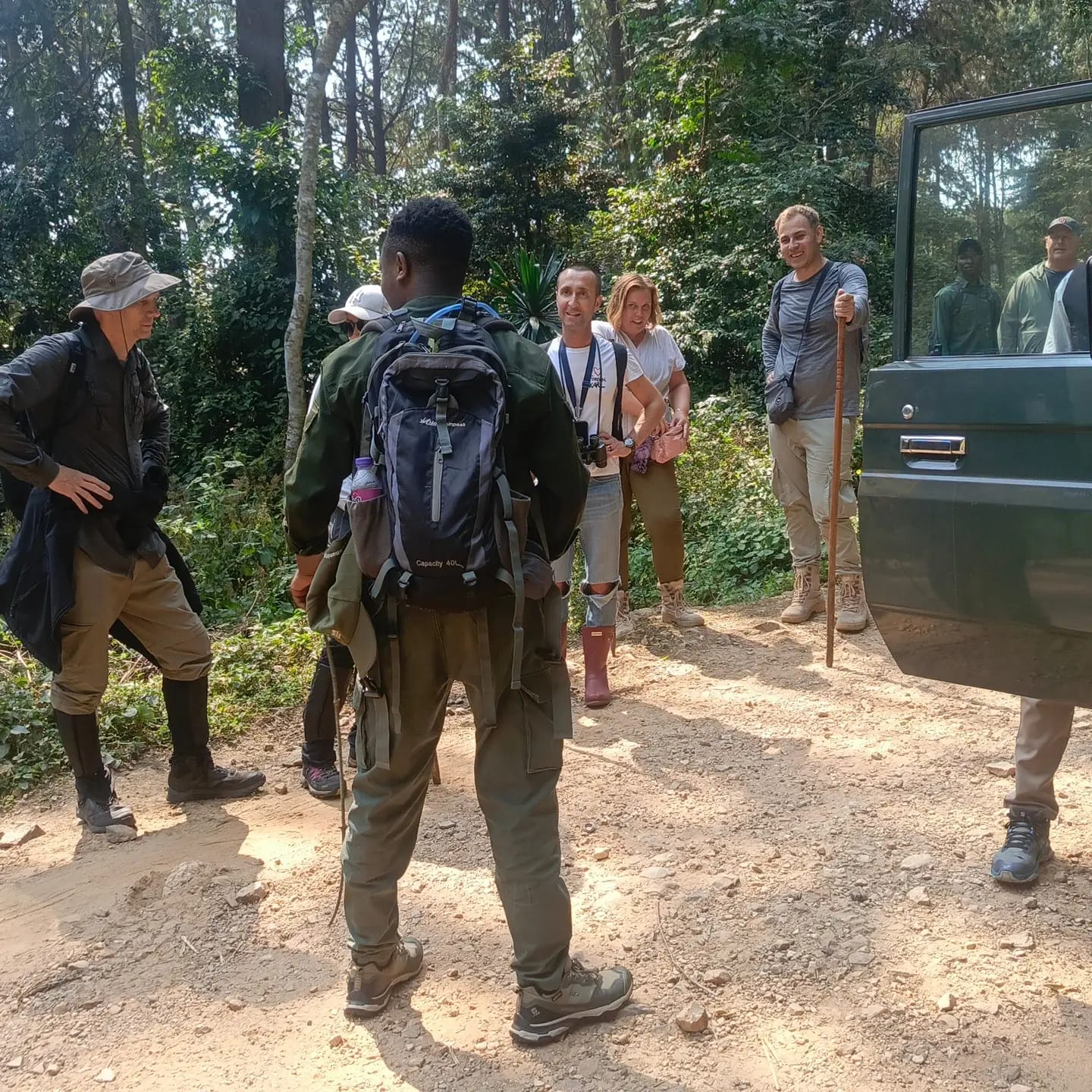
You meet your guide at the reception area, hear a short briefing and set off on foot. The trail runs through montane forest with moss, tree ferns, giant trees and the sound of birds. The guide stops to point out what lives there. Nyungwe protects thirteen primate species, and you may see or hear monkeys on the way, though sightings are never promised. The pace is gentle, with stops to look and listen. The path can be muddy and uneven, with steps and roots.
The crossing
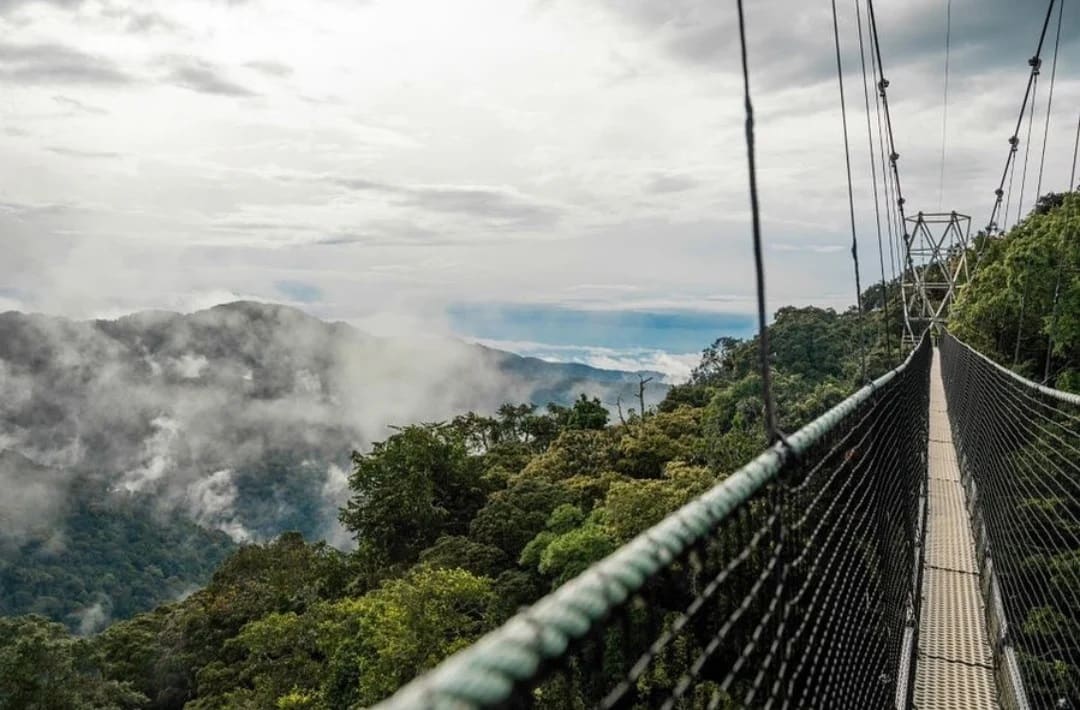
The walkway is about 200 metres long, and at its highest it is roughly 70 metres above the forest floor. It is narrow, it has side netting, and it moves a little as people walk. You cross in single file, with spaces between visitors, and the guide tells you when to start. Look out over the canopy, down onto the tree crowns, and across to the next ridge. Take your time, but do not stop in the middle for long, because the next person needs to step on.
The return
After the crossing, you walk back along the trail, or complete a loop, depending on the route chosen that morning. The whole outing usually takes two to three hours. When you return, you are ready for breakfast or lunch, a rest and the drive to your next stop.
What Does a Typical Canopy Walk Morning Look Like?
Every day varies, but the sequence is usually the same:
- Before dawn. You wake early at the lodge, have breakfast or a packed breakfast, and drive to the reception area.
- Early morning. You register, meet the guide and hear the safety talk.
- Mid-morning. You walk the forest trail, stop for birds or plants, and reach the walkway.
- Late morning. You cross, pause at the viewing points and return.
- Midday. You are back at the lodge for lunch and rest, or on your way to the next stop.
If you plan to travel on after the walk, ask for a late checkout or leave your bags in the vehicle, so that you do not need to rush the crossing. Guides prefer a calm group, and a calm group sees more.
What Else Can You Do in Nyungwe Around the Walk?
The walkway is one of several options, and combining them makes the long journey worth it. Chimpanzee tracking starts very early and can last several hours, depending on where the group has moved. Forest hikes of different lengths lead to waterfalls, viewpoints and bird-rich trails. Birdwatchers can look for Albertine Rift species that are hard to find elsewhere. The tea estates on the edge of the park offer a gentle visit with a different pace.
A typical stay uses two or three nights: one morning for the canopy walk, one for chimpanzees or a long hike, and an afternoon for the tea fields. Our guide to the best hiking trails in Rwanda compares the forest routes. To see how the whole region fits together, read about Nyungwe, an ancient rainforest and its primates.
Was solltest du tragen und mitbringen?
Dress for a forest that is cool and damp at any time of year:
- Footwear. Closed shoes with grip. Waterproof hiking shoes are best in the wet months.
- Clothing. Light layers, long trousers and a rain jacket. Mornings in the highlands are cool.
- Camera. Use a wrist or neck strap. Anything you drop from the walkway lands far below.
- Small daypack. Water, a light snack, sunscreen and insect repellent.
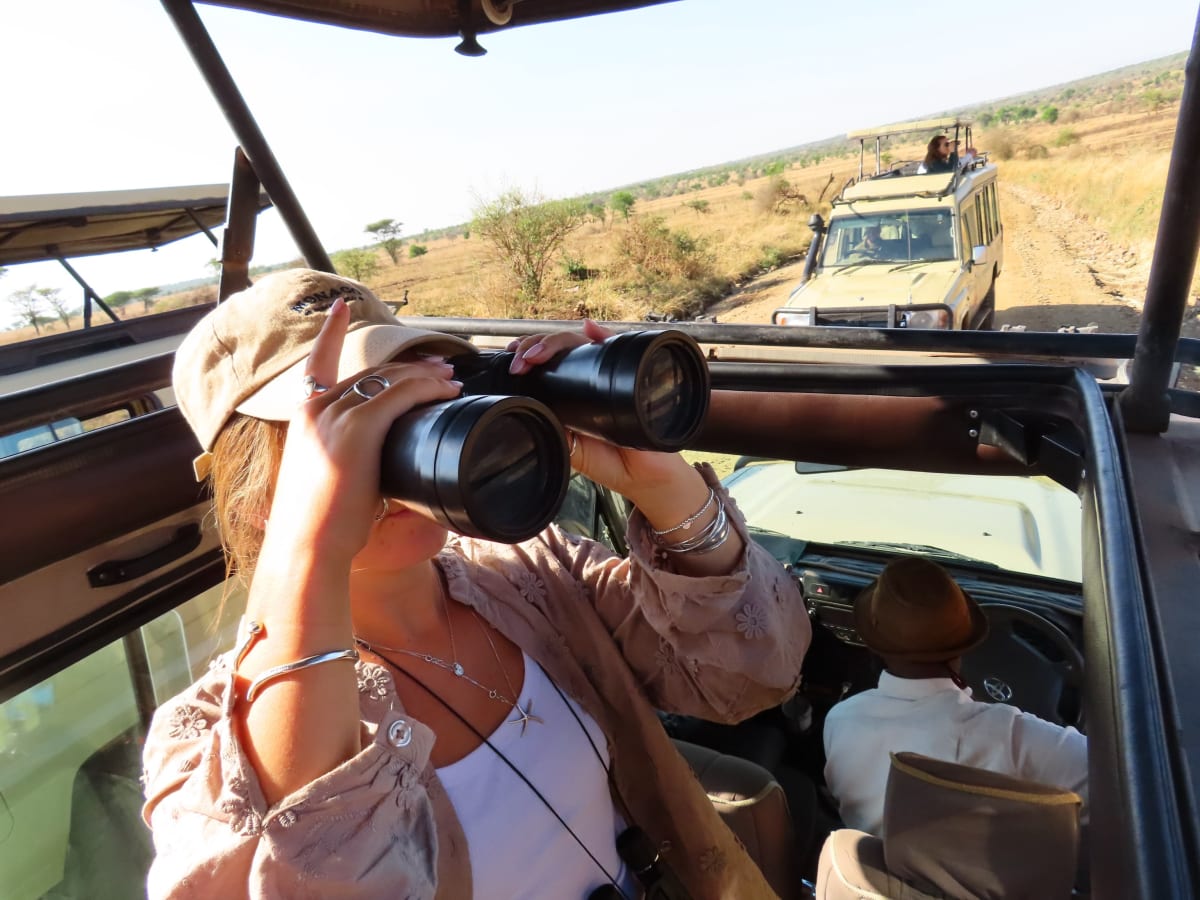
- Binoculars. Useful for birds and for primates at a distance.
Leave large bags and tripods at the lodge. If you plan to trek chimpanzees or gorillas on the same journey, read what to pack for gorilla trekking in Rwanda, which also covers most of what you need here.
When Is the Best Time to Walk?
The walkway operates through the year. June to September and December to February are the driest months, with the most reliable weather, and they bring the most visitors. March to May and October to November are wetter, and the forest is quieter and greener, with mist that can hide the view for part of the morning. Morning is usually better than the middle of the day, because the air is clearer and the forest is more active. If the weather is poor, the crossing may be delayed, which is why we recommend two nights in the forest. For the cost side of timing, read the Nyungwe National Park travel guide.
Is the Walkway Safe and Suitable for Everyone?
The walkway has side supports and netting, and guides control how many people cross at a time. It is suitable for most healthy adults and older children. It is not suitable for people who are very afraid of heights, who cannot manage uneven forest paths or who have mobility problems that make stairs and narrow walkways difficult. If this applies to you, tell us when you book, and we will plan an alternative forest activity. We never push anyone onto the bridge at the last moment, and neither does the guide.
Who Is the Canopy Walk Best For?
Am besten für
- Visitors who want to see a rainforest from above, without a technical climb
- Travellers combining gorillas with a second Rwanda park
- Families with older children who are used to hiking
Kann nicht ideal sein für
- Travellers who dislike heights or swaying bridges
- Anyone with only one day to spare for Nyungwe
Welche Fehler machen Erstbesucher?
- Arriving without enough sleep. The drive and the early start are tiring, so sleep near the park.
- Wearing smooth-soled shoes. Forest paths are slippery.
- Expecting a view in every weather. Mist is part of the forest.
- Leaving it to the last moment. Places are limited, and the best dates fill first.
Not sure it is for you? Read whether the Nyungwe canopy walk is worth it.
Frequently Asked Questions About the Nyungwe Canopy Walk
How long does the canopy walk take?
Plan on two to three hours from the reception area, including the forest trail and the crossing.
How many people cross at once?
Groups are kept small. The guide controls the spacing so that the walkway is never crowded.
Can I combine it with chimpanzee tracking?
Yes. Many visitors do both on different mornings. Read the chimpanzee trekking cost guide to plan the budget.
Is it possible to visit with children?
Older children who are comfortable with heights and walking often enjoy it. Tell us their ages when you book.
Planung deiner Reise?
Tell us your dates and who is travelling, and we will build the route, the lodge nights and the early start around the walk. Talk to Our Tour Specialist, or explore the Rwanda destination page.