The difference between gorilla trekking and gorilla habituation is time and purpose. Trekking takes you to a family that is already used to visitors and gives you one hour with it. Habituation takes you to a family that is still being accustomed to humans and lets you stay with it for up to four hours, alongside researchers and trackers. Habituation costs more, takes more effort and, at present, is offered only in the Rushaga sector of Bwindi in Uganda.
This guide compares the two on time, price, group size, fitness, where they are offered and what you see, so you can choose the one that suits you.

What Is Gorilla Trekking?
Gorilla trekking is the standard experience. Rangers and trackers lead a small group of visitors, usually up to eight, to a gorilla family that has been habituated, meaning it has spent two or more years learning to tolerate people nearby. When you find them, you spend one hour watching, photographing and listening. The walk can last from under an hour to most of the day, depending on where the gorillas are. It is offered in Rwanda, Uganda and the Democratic Republic of the Congo.
Read the complete guide to gorilla trekking in Rwanda for the standard experience.
What Is Gorilla Habituation?
Habituation is the process by which wild gorillas become used to human presence, so that researchers and, later, visitors can observe them without disturbing them. It takes about two to three years, working with the same family each day. The habituation experience lets a very small group, usually up to four visitors, join the trackers and researchers for part of that process. You stay with the family for up to four hours, rather than one, watching the gorillas as they feed, rest and move, and learning how the process works.
Because the gorillas are less accustomed to people, you are given strict rules about distance and behaviour, and the animals may be more wary at first.
How Do They Compare?
- Time with the gorillas. Trekking: one hour. Habituation: up to four hours.
- Group size. Trekking: up to eight. Habituation: up to four.
- Gorilla family. Trekking: fully habituated. Habituation: a family still being habituated.
- Price. Trekking is less expensive. Habituation costs more, and the permit is a premium.
- Where. Trekking in Rwanda, Uganda and the DRC. Habituation in Rushaga, in Bwindi.
- Effort. Both involve steep, wet terrain. Habituation takes longer in the forest.
How Much Do They Cost?
A Rwanda trekking permit costs US$1,500 per person. In Uganda, the trekking permit is much lower, and the habituation permit is US$1,500 per person, according to the rates we have checked. Prices are reviewed from time to time, and were checked in October 2026, so we confirm them in your quote. Habituation is more expensive than trekking in Uganda, but it can cost the same as a single trekking permit in Rwanda. Remember the extra costs: accommodation, transport and tips. Read how much it costs to trek gorillas in Uganda.
Which Experience Is Better?
Neither is better in every way. Trekking gives you a complete, well-structured encounter and is available in more places. Habituation gives you longer time with the animals, a deeper understanding of how conservation works and a smaller group. It also requires more stamina and patience, and the gorillas may be less relaxed. Photographers, researchers and travellers who return for a second experience often prefer habituation. Most first-time visitors are happy with trekking.
Quel niveau de forme physique faut-il avoir ?
Both need good basic fitness, a willingness to walk on steep, muddy terrain and the ability to stay in the forest for several hours. Habituation can last longer, because you stay with the gorillas for up to four hours after the walk to reach them, and you may follow them as they move. If you have a knee or heart problem, speak to a doctor and tell us. The minimum age is 15 for both. Read the gorilla trekking age limit in Rwanda and Uganda.
How Do You Book Each One?
Both need a permit, booked for a specific date. The habituation permits are far fewer, since only a few visitors may join each day, so they sell out early. Book at least six months ahead for the dry months. We arrange the permit, the lodge and the transport together. Read how to book a Uganda gorilla permit for the steps. For a trip with a sector near Rushaga, see the 7-day Bwindi gorilla trekking safari, or the 5-day gorilla trek in Bwindi.
What About Chimpanzee Habituation?
The same idea applies to chimpanzees in Kibale, where a full-day habituation experience is available alongside standard tracking. It is a separate permit and a different animal, and it costs less than the gorilla version. Read how much Kibale chimpanzee tracking costs, and see the Signature Journey 5-day Uganda chimpanzee habituation experience.
What Does a Habituation Day Look Like?
The day starts early. You meet the park rangers and the researchers at the sector headquarters and receive a briefing about the rules, which are stricter than for standard trekking. You walk with trackers into the forest to the place where the gorillas were left the previous evening. The walk can take one to several hours. Once you find the family, you stay with it, moving as it moves, for up to four hours. Researchers record behaviour, and you may be asked to stay still while the animals settle. Then you walk back to the park office, tired and often deeply impressed.
How Is the Gorilla Family Different?
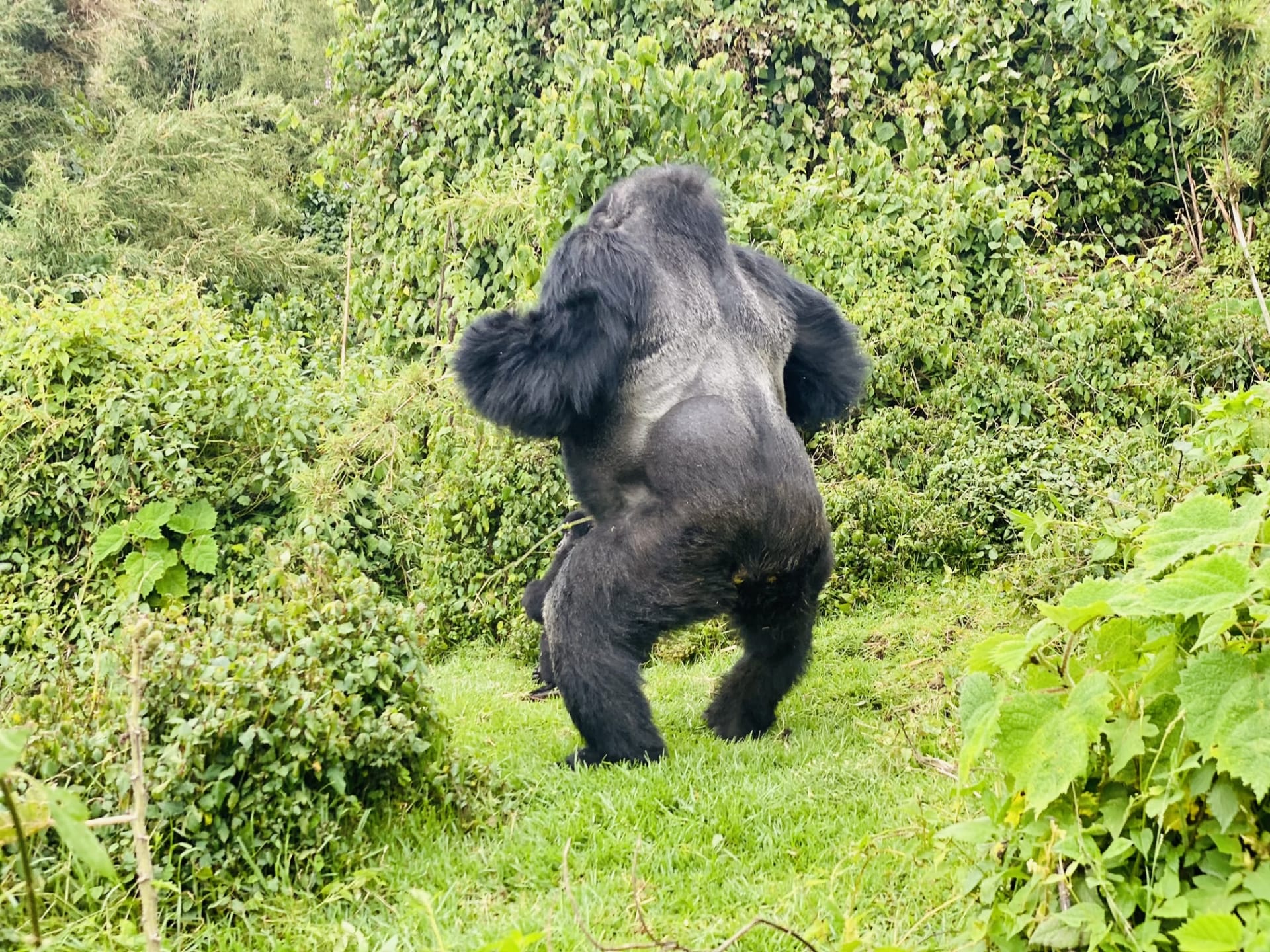
A family in habituation is less used to people. The gorillas may move away, scream or mock-charge at first, and rangers handle these moments calmly, according to strict rules. Over the weeks and years, the animals relax. Visitors on a habituation day see this early stage, which can be more dramatic and more varied than a fully habituated family. Some travellers find it more dramatic, and others prefer the calm of standard trekking. Both experiences are real; they differ in tone.
How Many Gorillas Are Habituated, and Why Does It Matter?
Only a limited number of families are habituated for tourism. Each takes years of patient work and carries a risk for the animals, who are exposed to human diseases. This is the reason for strict health rules: stay at least the required distance, wear a mask if required, never visit if you are ill and avoid eating near the animals. The permit fee pays for monitoring, anti-poaching patrols and community projects. Read mountain gorilla family facts to learn more about the animals.
Which One Should You Book First?
If it is your first gorilla experience, trek first. It is the standard, and it prepares you for the forest. If you return, consider habituation. Tell us your interests and your fitness, and we will recommend one. We also check whether permits are available for your dates, since habituation places are fewer. Read how to book a Uganda gorilla permit for the process.
Who Should Choose Which?
Best for trekking
- First-time visitors who want the classic gorilla encounter
- Travellers who prefer a shorter day
- Visitors in Rwanda, where habituation is not offered
Best for habituation
- Repeat visitors and photographers who want more time
- People curious about conservation work
May not be ideal
- Habituation for those with limited fitness or tight budgets
Quelles erreurs les voyageurs commettent-ils ?
- Assuming habituation is available in Rwanda. It is not.
- Booking late. Permits are few.
- Underestimating the effort. Four hours is a long time in the forest.
- Expecting the same behaviour. Habituating gorillas are more cautious.
Frequently Asked Questions About Habituation and Trekking
Is habituation worth the extra money?
For some travellers, yes. For first-time visitors, trekking is usually enough.
Can I do both?
Yes, on separate days with separate permits. Read can I go gorilla trekking twice.
Do gorillas get hurt by habituation?
The process is supervised by researchers and rangers, with rules to protect the animals and their health.
Are children allowed?
The minimum age is 15 for both.
Can I do habituation in Rwanda?
No. At present it is offered only in the Rushaga sector of Bwindi in Uganda.
Is habituation more dangerous?
Rangers manage the risks carefully, and rules protect visitors and animals. Always follow the guides.
Planifiez votre voyage ?
Tell us your budget and how much time you want with the gorillas, and we will recommend the right permit. Talk to Our Tour Specialist, or see the Uganda destination page.