The Great Migration safari packing list for Tanzania is simple: neutral layers for dust, sun and cold; closed shoes; a hat, sunscreen and sunglasses; binoculars and a camera with a long lens; a small first-aid kit; documents; and a soft bag that respects the weight limit of light aircraft. The Serengeti is dusty and open, mornings are cold on the vehicle and the sun is strong by midday. Pack for all three, and pack light.
This guide goes through each category, explains why it matters on the migration route and tells you what to leave at home.
What Clothes Should You Bring?
Choose neutral colours: khaki, olive, beige and grey. Avoid black and dark blue, which attract tsetse flies, and avoid bright colours that can disturb animals. Pack:
- Three or four lightweight long-sleeved shirts
- Two or three pairs of lightweight trousers
- Two pairs of shorts for warm hours
- A fleece or warm jacket for early mornings
- A light rain jacket
- Sleepwear and a swimsuit if your lodge has a pool
- Underwear and socks for a week, with laundry on the way
Most camps offer laundry, so you do not need a fresh outfit each day.
How Cold and How Dusty Is the Serengeti?
Both more than most visitors expect. Mornings and evenings are cool, sometimes cold on an open vehicle at dawn, with a wind chill that bites. By midday, the sun is hot. Dry-season roads throw up thick dust, so a scarf or a buff for your face and a hat help. Bring a plastic bag or a dry bag to keep electronics clean. In the rainy months, expect showers and mud, and bring waterproof layers.
What Footwear Do You Need?
Comfortable closed shoes or light hiking boots work for most activities. Sandals or flip-flops are enough for the camp. If you take a walking safari or hike in Ngorongoro, bring sturdy shoes that you have already worn in. Pack warm socks for cold mornings. Do not bring heavy boots unless you plan to climb.
What Gear Is Important During the Migration?
The herds can be far away, and the river crossings are brief, so equipment matters more than on other safaris:
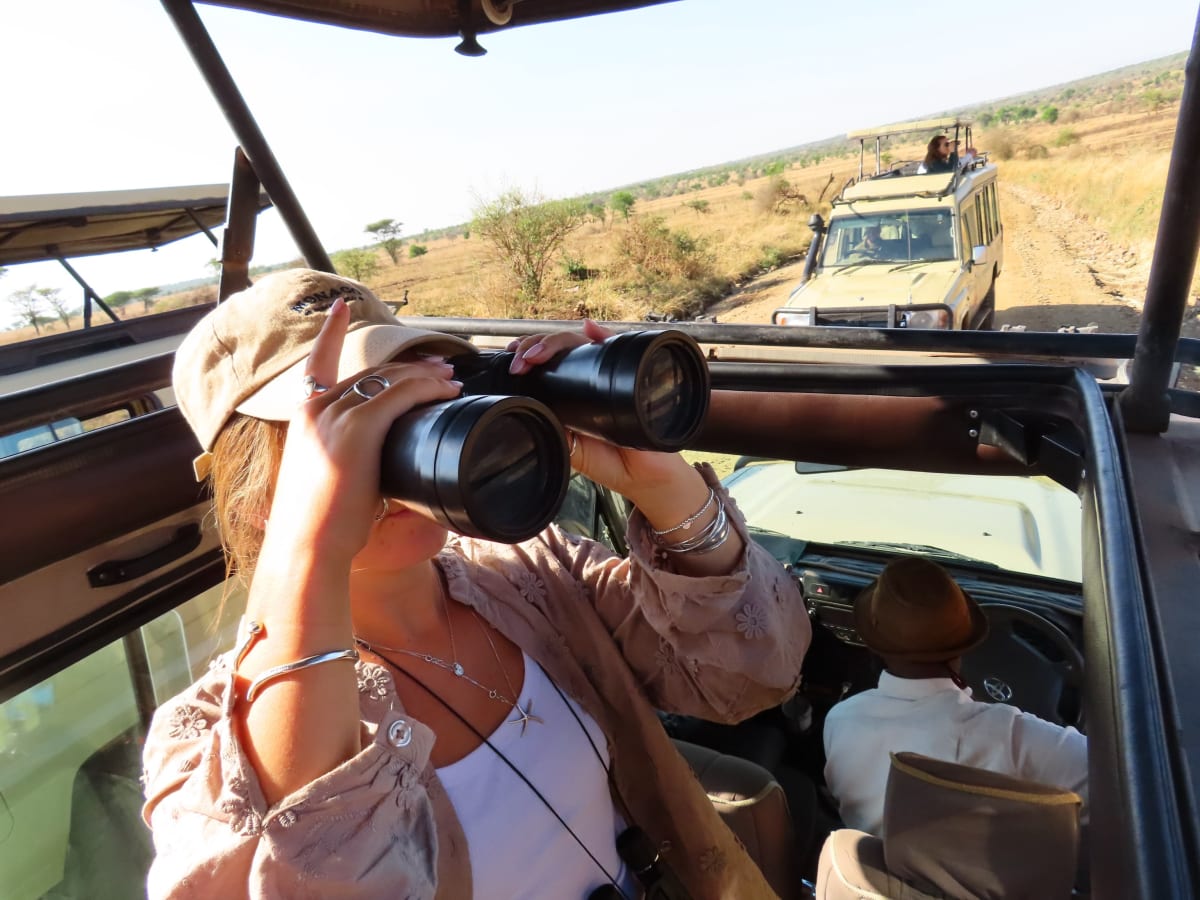
- Binoculars. Essential for distant herds and predators.
- Camera. A lens of 200 to 500 millimetres suits most sightings.
- Spare batteries and memory cards. Cold drains batteries, and you will take many photos.
- Bean bag or clamp. To steady your camera on the vehicle.
- Dust cover and cloths. To protect the gear.
- Power bank and adapter. Tanzania uses its own plug types, so bring a universal adapter.
Read our photography guide for settings that help with wildlife, and the Great Migration month by month to plan what you will see.
What Health Items and Documents Do You Need?
Speak to a doctor or travel clinic about vaccinations and malaria prevention. Pack personal medicines in their original packaging, a small first-aid kit, insect repellent, sunscreen, lip balm and hand sanitiser. Bring a copy of your prescriptions. Carry your passport, visa, flight details, insurance papers and, if required, a yellow fever certificate. Keep copies in a separate bag. Read the visa guide, and ask us about free visa application consultancy.
How Do Baggage Limits Work?
If you fly between airstrips in the Serengeti, you travel on small aircraft with a strict weight limit, usually about 15 kilograms per person including hand luggage, in a soft bag without wheels. Hard suitcases do not fit. Leave extra luggage at your hotel in Arusha. Wear your heaviest items on the plane. Ask us for the exact limit for your flight before you pack. Read what to pack for a Tanzania safari for general travel items.
What Should You Leave at Home?
Leave behind:
- Camouflage clothing, which is not allowed in some areas
- Drones, which are restricted in the parks
- Plastic bags, which are banned in Tanzania
- Large hard suitcases
- Valuable jewellery
Bring cash in small US notes for tips. Our itineraries, such as the 7-day Tanzania Great Migration safari and the 9-day Great Migration safari, come with a packing list tailored to the dates.
Who Does This List Help Most?
Idéal pour
- First-time safari travellers
- Photographers planning a river-crossing trip
- Anyone flying on light aircraft
Peut ne pas être idéal pour
- Travellers combining a Kilimanjaro climb, who need extra gear; ask for a combined list
Does the Type of Camp Change What You Pack?
Yes, a little. In permanent lodges, you have a room with a wardrobe, electricity and often a pool, so you can pack a swimsuit, a light dress and smart casual clothes for dinner. In permanent tented camps, the tent has a bathroom, but space is smaller, and soft bags are essential. In mobile camps that follow the herds, the tents are simpler, the power is limited and the nights are cooler, so a warm layer and a headlamp are more useful than a nice shirt. Whatever the camp, you will not need formal clothes. Ask us which type you will use on each night, and we will adjust the list.
How Do the Months Change the List?
The migration calendar shapes the weather. From June to October, when the herds are in the north and the Mara River crossings take place, days are dry and dusty, mornings are cold, and you need a buff, a warm fleece and sun protection. From December to March, when the herds are in the southern plains and the calves are born, there are more showers and green grass, and a light rain jacket matters more. April and May are the long rains, with mud and fewer visitors, so waterproof shoes and a dry bag are worth the space. Read the Great Migration in Tanzania month by month to match the list to your dates.
What Should You Carry on Each Game Drive?
Keep a small bag at your feet with the items you reach for often: binoculars, camera, spare battery, sunscreen, lip balm, a scarf or buff, a hat, a water bottle and a light jacket. Leave bulky items at camp. For river crossings, bring a sandwich or snack, since you may wait for hours by the water, and a seat cushion if your back is sensitive. A small notebook helps you keep a list of sightings. Charge your batteries every night, and keep spare memory cards, because the herds produce more pictures than you expect.
What About a Hot-Air Balloon Flight?
A balloon flight over the Serengeti starts before dawn, when the air is coldest. Dress in layers you can remove after the flight, because the sun warms the plains quickly, and wear closed shoes that grip. Long trousers are useful for the landing. Bring a small camera or phone with a wrist strap, but accept that you will be busy looking. The breakfast after the flight is usually served in the bush, so a hat and sunglasses are welcome. Not everyone enjoys balloon flights, and they cost extra, so ask whether the camp includes one.
How Do You Keep Your Gear Clean and Safe?
Dust is the main enemy of cameras. Keep lenses covered when you are not shooting, use a lens cloth and a blower, and avoid changing lenses in the open. Carry a zipped bag or a dry bag to protect your kit on bumpy tracks. Store batteries and cards in separate pockets, and back up your photographs to a laptop or a drive every evening. A small silica gel pack in the camera bag helps in humid weather. These small habits save a trip from the common disaster of a failed card or a clogged sensor.
Quelles erreurs les voyageurs commettent-ils lors de l’emballage?
- Packing too much. Soft bags and laundry make a small kit enough.
- Forgetting warm clothes. Mornings are cold.
- Skipping binoculars. They change the day.
- Bringing plastic bags. They are prohibited.
Frequently Asked Questions About Packing for the Migration
Do I need a formal outfit?
Non. Le smart-casual suffit pour le dîner.
Can I wear shorts?
Yes, in the warm hours. Long sleeves help against sun and insects.
Y a-t-il un service de blanchisserie?
Most camps offer laundry, sometimes at an extra charge.
What should I do about motion sickness?
Rough tracks can cause it. Bring tablets if you are prone to it.
Do I need a hat with a chin strap?
A hat that stays on in a moving open vehicle is useful, and a strap helps in wind. A cap with a neck cover also works well.
Can I charge devices in camp?
Most camps offer charging in the common area or the tent, sometimes only at certain hours. Bring a power bank for the road.
Planifiez votre voyage ?
Tell us your month and your camps, and we will send a packing list that fits. Talk to Our Tour Specialist, or see the Tanzania destination page.