Tour destacado
Experiencia de 5 Días de Hábitat de Chimpancés en Uganda
Horas
5 Days / 4 Nights
Ubicación
Uganda
Dificultad
Desafiante
Resumen
This 5 day Uganda chimpanzee habituation experience is for travellers who want more than the standard hour with chimpanzees. In Kibale, you join the researchers and trackers who are teaching a chimpanzee community to accept people, and you spend an extended day in the forest, following the group from the early morning. It is much longer than standard tracking, needs a special permit and is physically demanding, and we explain exactly what it involves before you book.
Resumen del viaje
- Duración: 5 días, 4 noches
- Route: Entebbe, Kibale Forest, Bigodi Wetland Sanctuary, Entebbe
- Main experiences: the chimpanzee habituation experience, a Bigodi Wetland visit
- Travel: private 4x4 with fuel. Entebbe to Kibale is about 5 to 6 hours each way
- The experience: an extended forest day, starting very early, with much more time with the chimpanzees than standard tracking
- Fitness: demanding. Long hours in the forest on steep, wet ground
- Permit: required and limited. A higher minimum age than standard tracking may apply, confirmed on enquiry
- Inicio y fin: Aeropuerto Internacional de Entebbe
What You Will Do on This Habituation Experience
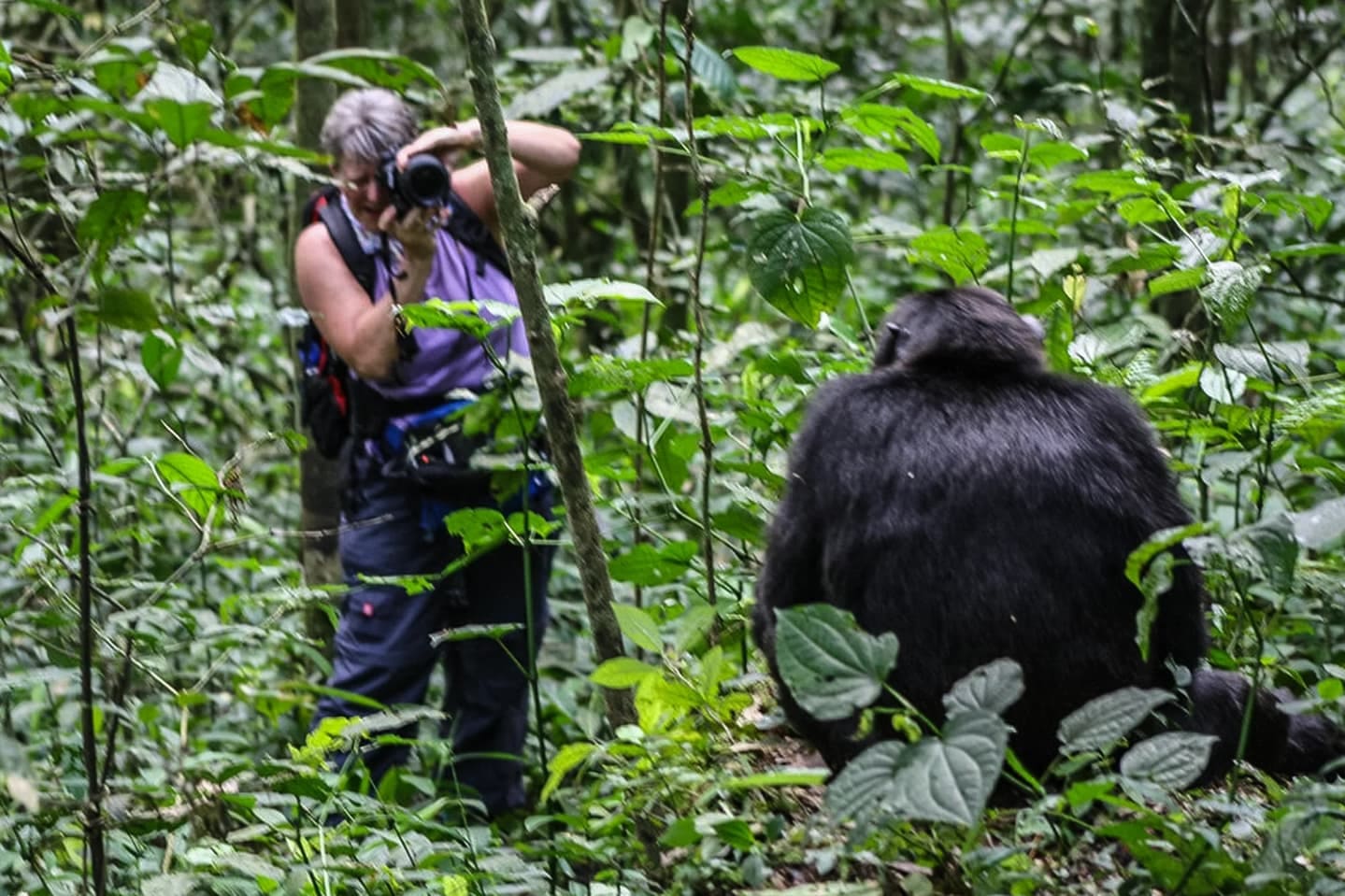
Standard chimpanzee tracking is a morning or afternoon outing: you find the group and stay for about an hour. The habituation experience is a different kind of day. You set out before sunrise with the trackers and researchers, meet the chimpanzees where they slept and follow them as they wake, feed and move, staying with them for much longer than in a standard visit. The chimpanzees are still being taught to accept people, so behaviour is less predictable, and guests are asked to follow the rangers closely. Read whether you can go gorilla trekking twice and the difference between gorilla trekking and habituation for the idea applied to gorillas; the principle is similar.
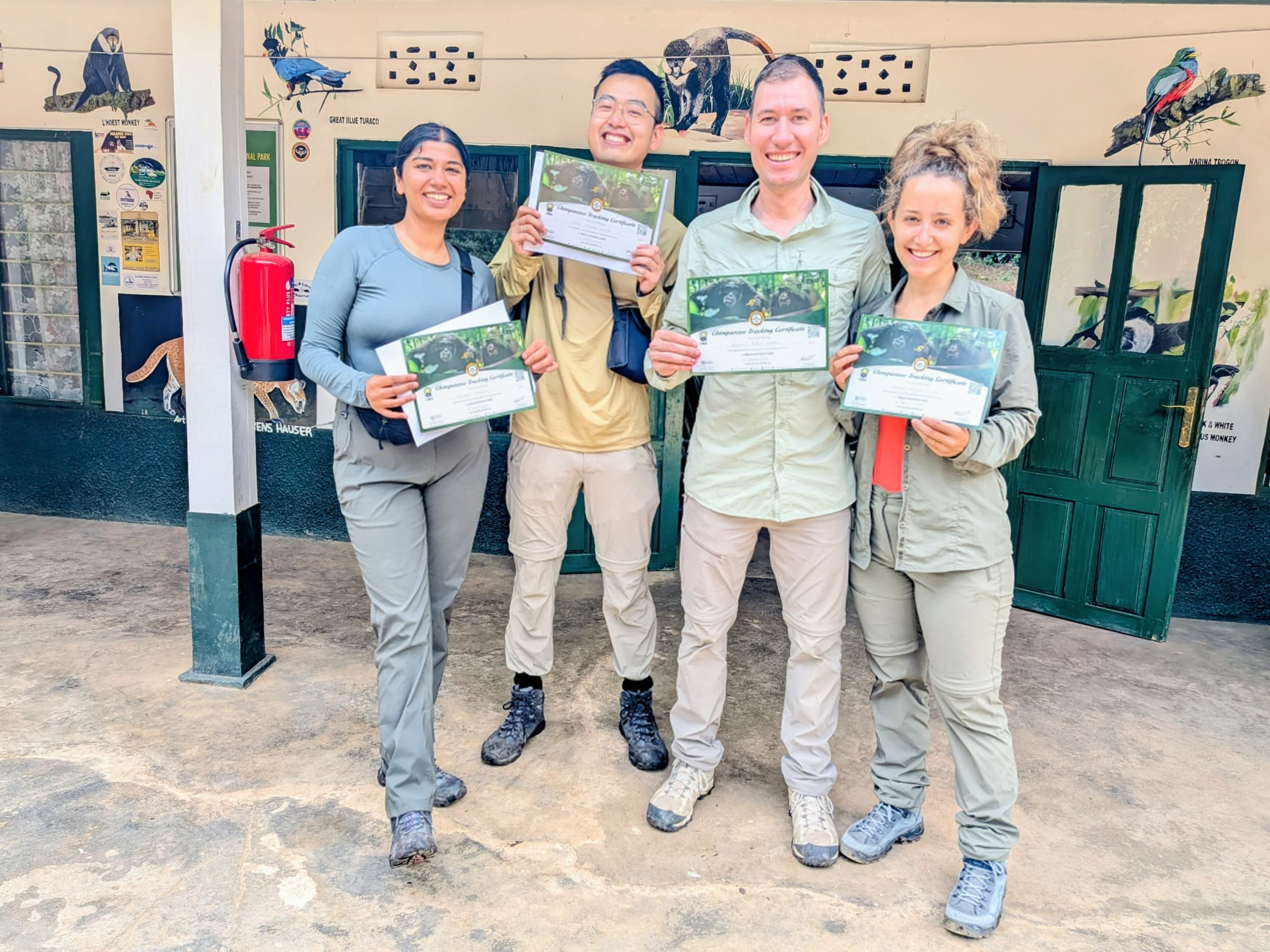
Guests with their tracking certificates after the walk.
The day after, you visit Bigodi Wetland Sanctuary, a community-run area near Kibale, where a local guide takes you along a boardwalk and trails for monkeys, birds and plants. It is an easy day after a hard one. Read what chimpanzee tracking in Kibale costs to see how the standard experience compares, and whether Kibale is the best place for chimpanzee tracking. Browse the chimpanzee tracking page and the Uganda destination page.
Cómo este viaje contribuye
Habituation is long, slow work done by rangers, researchers and local trackers, and the permit fee helps pay for the forest and the people who protect it. On the wetland day, a community guide leads the walk, and the visit supports the community that runs the sanctuary. We choose these places because the money goes to local people who look after the land.
For another way to see conservation and community together, see our Signature Journey, the 10-day Rwanda chimpanzee tracking and Eco Hive Guardian tour, and the Hive Guardian initiative.
How Hard Is the Habituation Experience?
It is demanding. The day starts very early and is long, with many hours on steep, muddy and uneven ground, and the chimpanzees may move quickly through thick undergrowth. You need good fitness, sturdy boots and a packed lunch. It is not a casual outing, and it is not suitable for anyone with limited mobility or a heart or breathing condition. If you want a gentler option, standard tracking is a better choice, and we can give you that instead. Read what to pack for chimpanzee tracking in Kibale.
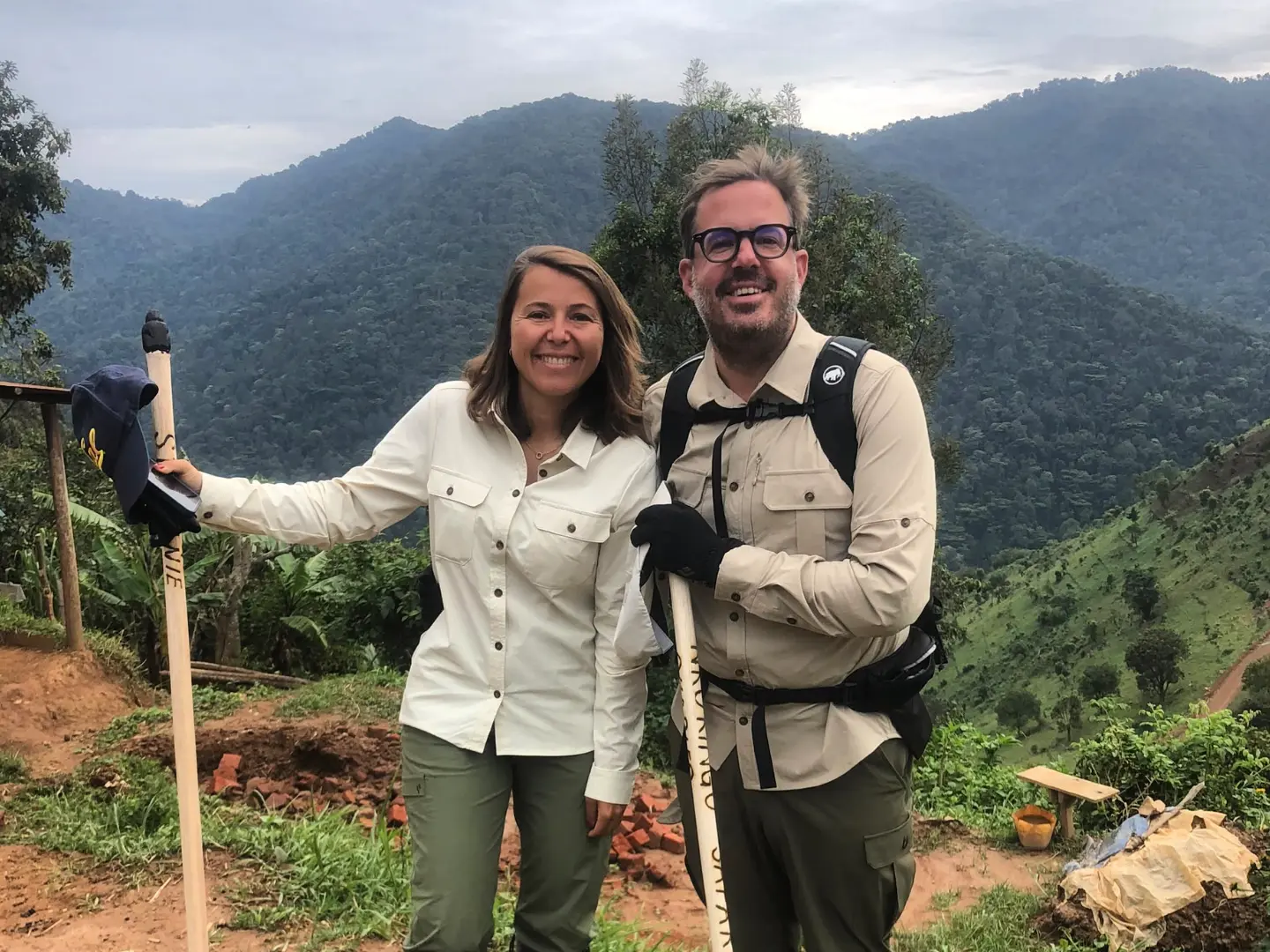
On a forest walk.
Mejor época para ir
June to August and December to February are the drier seasons, and the forest trails are easier then. The rainy months, March to May and September to November, make the ground slippery and the day harder, though the experience still runs. Permits are limited, so book early. Read the best time for chimpanzee tracking in Kibale for more.
¿Para quién es este viaje?
This journey suits fit, patient travellers who want to see chimpanzee behaviour over time, including photographers and wildlife enthusiasts. It is not for first-time safari visitors who want an easy outing. For standard tracking and big game, see the 6-day Uganda chimpanzee tracking and Kazinga Channel safari. For a longer route with gorillas, see the 10-day Uganda primates and wildlife expedition.
Planifica tu viaje
Tell us your fitness, your hiking experience and any health condition, and we will tell you honestly whether habituation suits you or standard tracking is better. We advise on visas free of charge and confirm lodging after booking. Read whether you can combine Kibale chimpanzee tracking with gorilla trekking and the best bird-watching spots in Uganda.
1
2
3
Select Package Type
1
2
3
Select Package Type
Paquetes de viaje recomendados
Cargando recomendaciones...