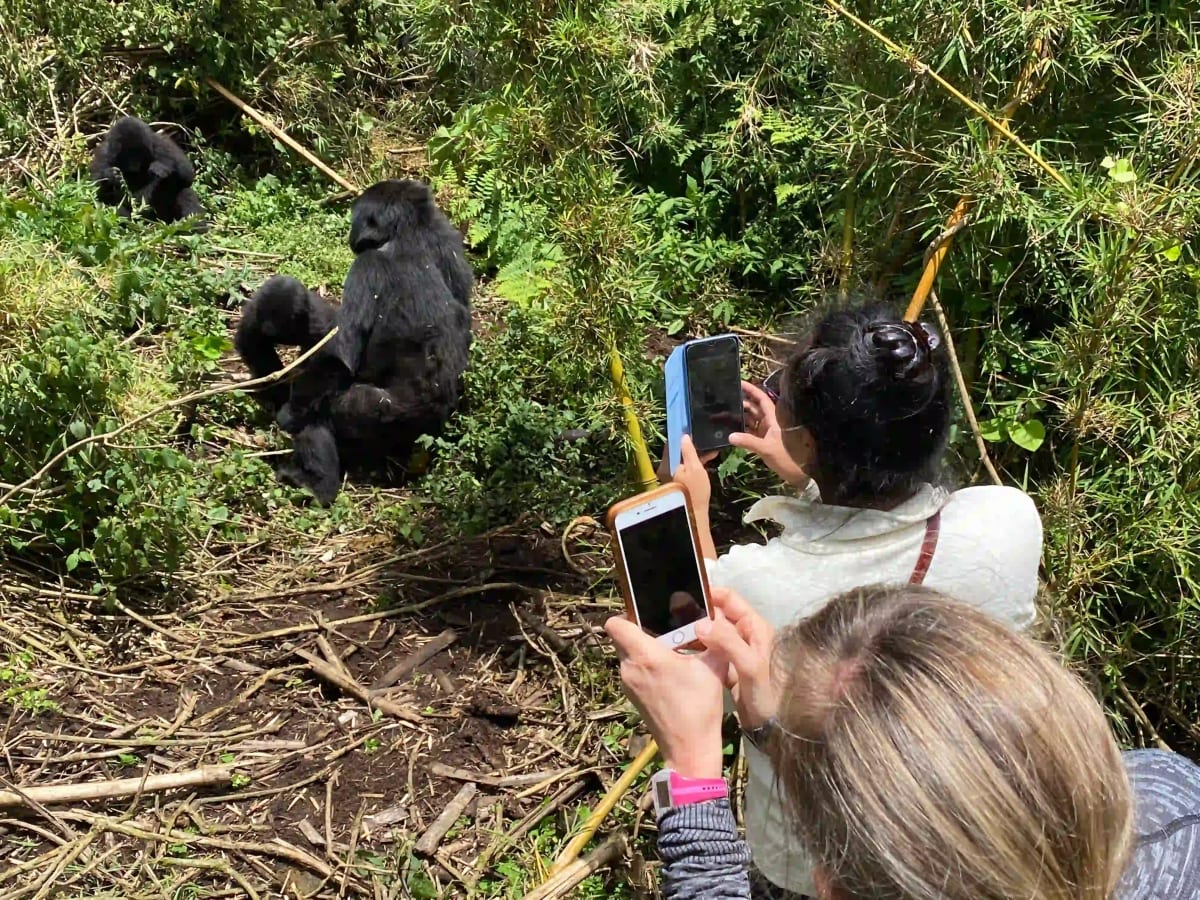
For gorilla trekking in Rwanda, pack waterproof hiking boots, long quick-dry trousers, a long-sleeved shirt, a waterproof jacket, a warm mid-layer, light gloves and a small daypack. Add two litres of water, a snack, a camera without flash and your passport. You walk for anywhere from 30 minutes to four hours or more on steep, muddy ground, so comfort and grip matter more than style.
This list is part of our complete guide to gorilla trekking in Rwanda. It explains what to bring, why each item matters and how to adapt for the season. Items marked as rules come from the Rwanda Development Board (RDB), which advises long trousers and shirts, sturdy shoes or boots, rain gear, water and a camera without flash.

What Is the Weather Like on a Gorilla Trek?
Volcanoes National Park lies in the Virunga mountains, and the forest begins at about 2,400 metres above sea level. Mornings at the park headquarters in Kinigi are cool, the air under the trees is damp and showers can arrive in any month. You may sweat on the climb and then feel cold when you stop to watch the gorillas for an hour. In the wetter months, March to May and October to November, the trails are muddier. The drier months are June to September and December to February.
So plan for layers, not heavy winter clothes. You want fabrics that dry quickly and protect you from wet leaves, nettles and insects.
What Should You Wear for Gorilla Trekking?
Tops and mid-layers
Start with a breathable, moisture-wicking T-shirt or long-sleeved base layer, then a light long-sleeved trekking shirt. Pack one thin fleece or light insulated jacket for the briefing, for exposed ridges and for standing still near the gorillas. Neutral greens, browns and greys are practical. Avoid bright white and neon colours.
Trousers
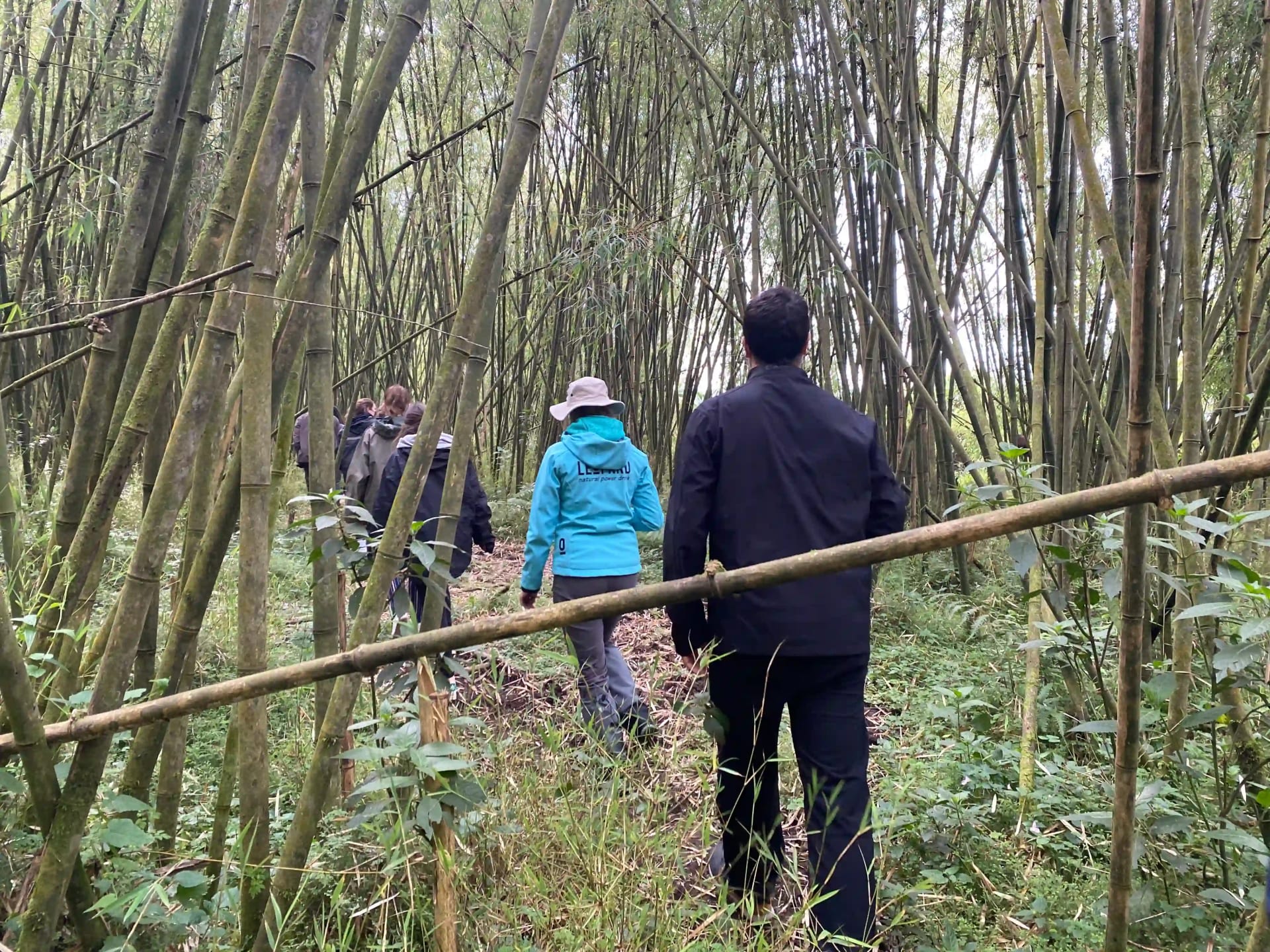
Wear long trousers. The route passes through bamboo, vines and stinging nettles, and RDB advises long trousers for this reason. Quick-dry hiking trousers are better than jeans, which stay heavy and wet. Shorts are not suitable. Many trekkers tuck their trouser legs into their socks or wear gaiters to keep out ants and burrs.
Rain protection
Bring a waterproof, breathable jacket in every season, because forest rain can come with little warning. In the wet months, lightweight waterproof overtrousers keep mud off your base layer and make it easier to kneel or sit.

Boots and socks
Sturdy, waterproof hiking boots with ankle support and a good tread are the most important item on the list. Trails are steep, slippery and scattered with loose volcanic rock. Trail runners are lighter but give less support and let in more water. Wear them in before you travel, because new boots cause blisters on a long climb. Choose merino or synthetic hiking socks and bring a spare pair to change into before you reach the gorillas.

Gloves
Light gloves with grip protect your hands from nettles and thorny branches and help you hold on to vegetation on steep sections. Gardening gloves are a cheap and practical choice.
What Should Be in Your Daypack?
A 20 to 30 litre pack is enough. Many trekkers hire a porter at the park to carry it, and the fee also supports a local family. Confirm the current porter rate when you book. Pack the following:
- Two litres of water in reusable bottles or a hydration bladder
- A high-energy snack. You cannot eat, drink or smoke near the gorillas, so eat before you reach them
- Your passport and permit confirmation in a waterproof pouch
- Sunscreen, lip balm, insect repellent and a hat, because UV is strong at altitude even on cloudy days
- A small first-aid kit with your own medicine, plasters and blister patches
- Hand sanitiser and a spare bag for your rubbish

What Camera Gear Is Allowed on a Gorilla Trek?
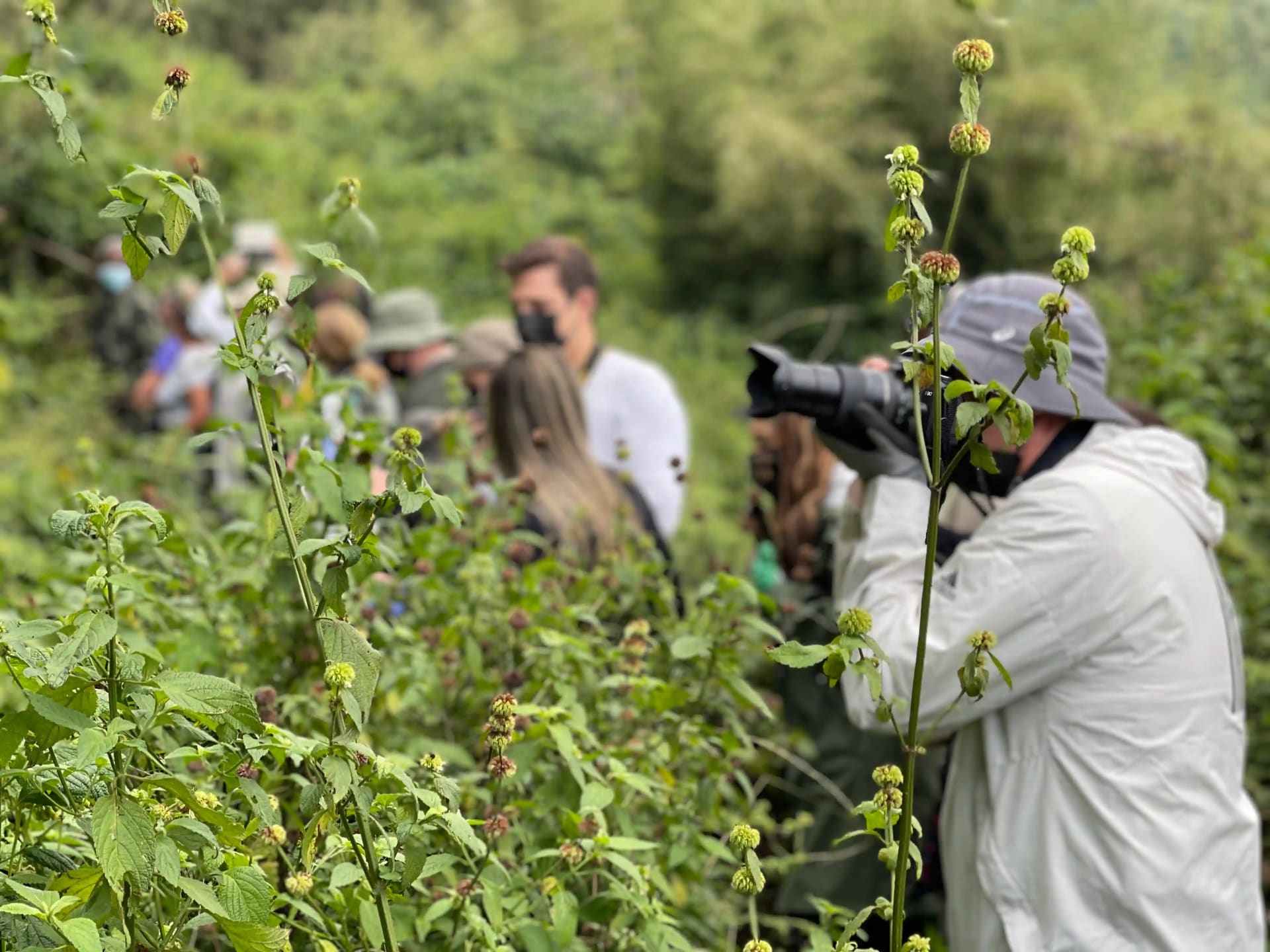
Flash is not allowed. A smartphone works well in the soft forest light. If you carry a camera, one zoom lens, such as a 24 to 70 mm or a 70 to 200 mm, is easier than several lenses in the rain. Bring a rain cover or dry bag, a microfibre cloth and spare batteries, because batteries drain faster in cool, damp air. You get one hour with the gorillas, so keep the camera ready and also spend time simply watching. Our gorilla photography guide covers settings and etiquette.
Why Does Rwanda Ban Plastic Bags?
Rwanda banned non-biodegradable plastic bags in 2008, and the ban is enforced at the airport and the borders. Pack with cloth bags, dry sacks or packing cubes instead of plastic carrier bags, and bring a bag for rubbish on the trek. Do not litter in the forest.
Gorilla Trekking Packing Checklist
- Waterproof hiking boots with ankle support, broken in
- Two pairs of hiking socks
- Moisture-wicking base layer and a light long-sleeved trekking shirt
- Quick-dry long hiking trousers (and optional waterproof overtrousers)
- Warm mid-layer, such as a light fleece
- Waterproof, breathable jacket
- Light gloves with grip
- Sun hat or cap, and a buff or neck gaiter
- 20 to 30 litre daypack with a rain cover
- Two litres of water and a snack
- Passport and permit confirmation in a waterproof pouch
- Personal first-aid kit and medication
- Sunscreen, lip balm, insect repellent and hand sanitiser
- Camera or phone (no flash), spare battery or power bank
- Dry bags or packing cubes instead of plastic bags
- Casual clothes for the lodge after the trek
Best for
First-time trekkers, families with teenagers and anyone travelling from a warm climate who is unsure how cold and wet the forest feels.
May not be ideal for
Travellers who plan to rely on renting kit at the park. Lodges near Musanze may be able to lend gaiters, ponchos or walking sticks, but sizes and stock are not guaranteed. Bring boots, socks and base layers from home.
What Packing Mistakes Do First-Time Trekkers Make?
- Packing new boots. Wear them for several walks first.
- Leaving the rain jacket at the lodge. The forest is wet even on clear days.
- Wearing shorts. Nettles and thorns make long trousers necessary.
- Carrying too much camera equipment. Heavy lenses tire you on the climb.
- Bringing plastic bags. Rwanda bans them.
- Forgetting a warm layer. You cool quickly while standing with the gorillas.
Frequently Asked Questions About Packing for Gorilla Trekking
Do I need waterproof hiking boots for gorilla trekking?
Yes. Trails are steep, muddy and uneven in every season, so waterproof boots with ankle support and good grip keep you stable and your feet dry.
Can I wear shorts on a gorilla trek?
We advise against it. Nettles, thorns and insects make long trousers the safer choice.
Are walking sticks necessary?
They are optional but useful on steep or slippery ground. Simple wooden sticks are usually available at the trailhead.
Do I need gaiters?
They are optional. In the wetter months they keep mud, seeds and water out of your boots.
Planning Your Trip?
Tell us your travel month, fitness level and wider plans, and our tour specialist can help you build a packing list and a route that fits. See the 4-day Rwanda gorilla trekking tour or Talk to Our Tour Specialist. You may also like our gorilla trekking tips and our guide to age limits.