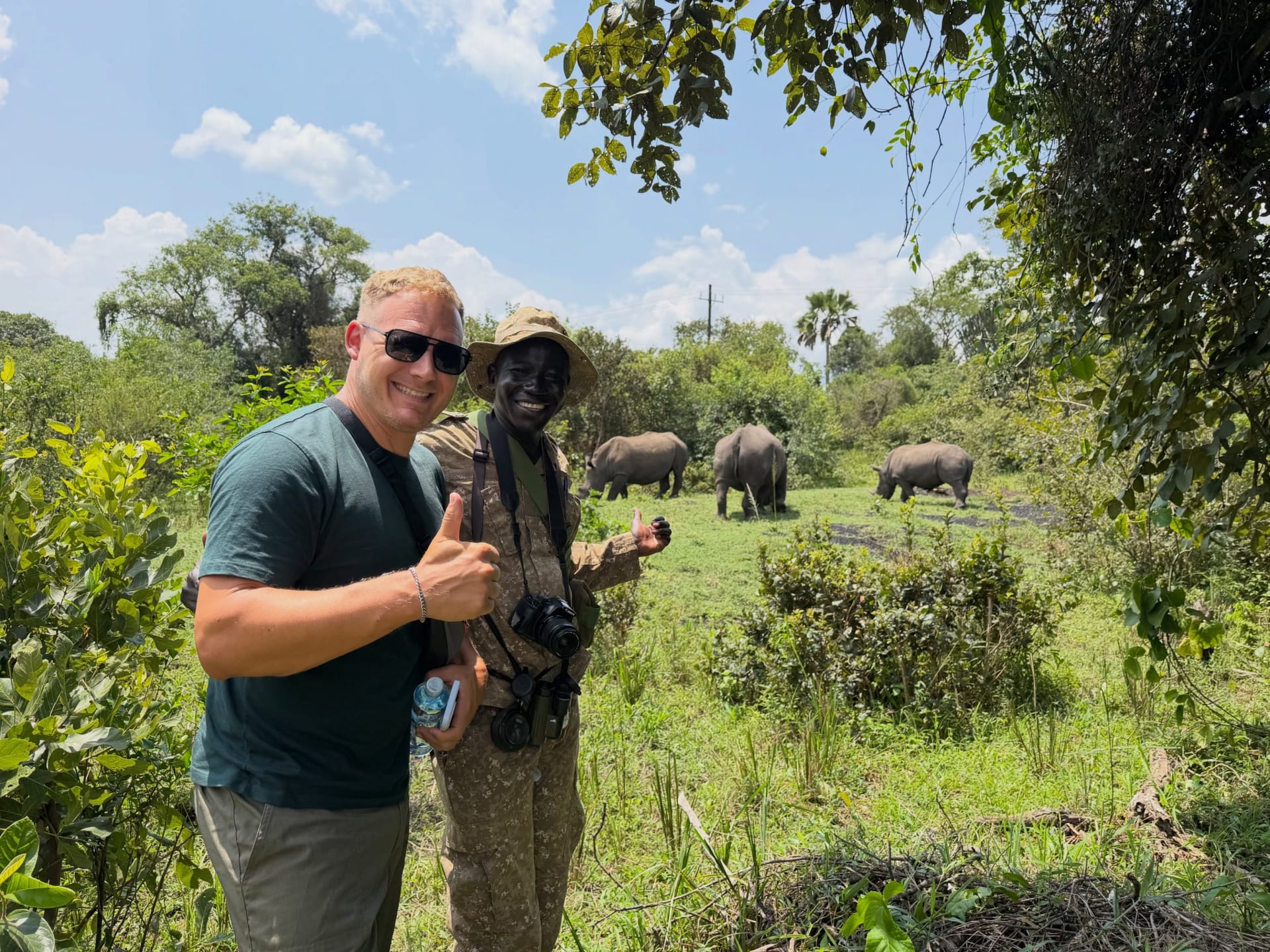
Yes, you can see rhinos in Uganda, but there is only one place to do it: Ziwa Rhino Sanctuary, on the road north from Kampala toward Murchison Falls. Wild rhinos disappeared from Uganda in the early 1980s because of poaching, and the animals you see today are southern white rhinos that were reintroduced and are protected in a fenced sanctuary. You track them on foot, with a ranger, and stand close enough to hear them graze.
This guide explains how the sanctuary came about, what the visit is like and how to fit it into a Uganda safari.
Why Are There No Rhinos in the National Parks?
Uganda once had both black rhinos and northern white rhinos, mainly in Murchison Falls and Kidepo Valley. Poaching and the years of unrest in the 1970s and early 1980s wiped out the wild populations, and the last rhinos disappeared by the early 1980s. The country went for decades without any, until a conservation project brought a few animals back and began breeding them in a protected area.
The long-term goal is to rebuild a population large enough to be released in the national parks again. That is a slow process, and until it happens, the sanctuary is the only place in the country where you can see rhinos.
What Is Ziwa Rhino Sanctuary?
Ziwa is a protected area of about 70 square kilometres in Nakasongola District, roughly 170 kilometres north of Kampala on the road to Masindi and Murchison Falls. It was set up in the mid-2000s by a conservation group, and it is now home to a growing population of southern white rhinos, with more than thirty animals and regular births. The sanctuary is fenced and guarded around the clock, and rangers monitor the animals every day.
The money from visitors pays for protection and veterinary care, and for the plan to restock Uganda's parks. Rangers also run community and education projects with nearby villages. That is why a visit counts as a contribution, not just an activity.
What Is It Like to Track Rhinos on Foot?
You meet a ranger at the visitor area, receive a short briefing and walk into the bush with a guide. Trackers know where the rhinos spend the day, so the search is usually short. The walk is flat and gentle, on open ground with scattered trees, and the rhinos are often found resting or grazing in the shade, in family groups with calves.
You approach as close as the ranger judges safe, in a group, quietly, and watch them for a while. White rhinos are large but calm when undisturbed. Rangers explain their habits, their diet and the work of monitoring. The visit takes two to three hours including the briefing. Read the best time to visit Ziwa Rhino Sanctuary for timing.
What Else Can You See at the Sanctuary?
The sanctuary protects savanna, woodland and swamp, and the walk shows more than rhinos. Bushbuck, waterbuck, vervet monkeys and many birds live in the area, and the swamp edge sometimes holds shoebills. Over 300 bird species have been recorded, so a keen birder can make a rewarding visit. Ask your guide to take you past the water if you hope for birds. For a dedicated shoebill trip, read can you see shoebills at Mabamba Swamp.
How Does Ziwa Fit Into a Uganda Safari?
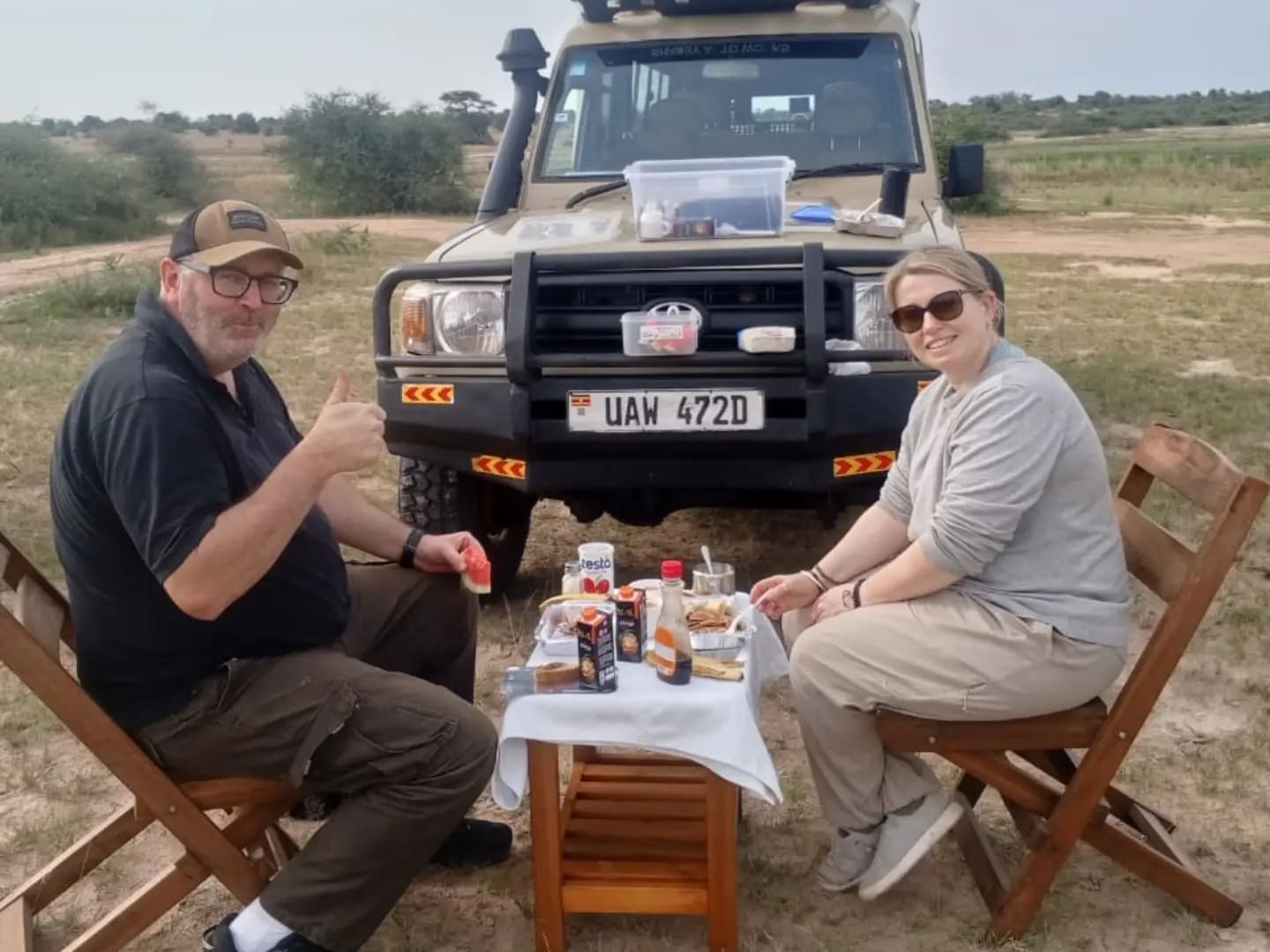
Ziwa is on the road to Murchison Falls National Park, so it makes a natural stop on the way up or down. The usual plan is to leave Kampala or Entebbe early, reach the sanctuary by late morning, track the rhinos and continue to Murchison Falls for the night. The whole drive takes five to six hours with the stop. Read the best Uganda safari tours including Ziwa Rhino Sanctuary and Murchison Falls to compare routes.
A ready-made version is the 5-day Uganda rhinos and Murchison Falls safari.
Is It Suitable for Children and Older Travellers?
Yes. The walk is short and flat, the rangers control the pace, and the setting is safe. Children who can walk for an hour or so and follow instructions often love it. Older travellers who struggle with longer treks can manage it easily. Tell us about any mobility needs, and we will tell the rangers. Remind children to stay quiet and close to their guide.
How Does the Sanctuary Protect the Rhinos?
The rhinos are guarded around the clock by armed rangers who monitor each animal daily, record its health and keep it safe from poaching. Veterinary care is provided when needed. The sanctuary is fenced, and the perimeter is patrolled. The animals live in a controlled setting, and the project plans to release offspring into the national parks when conditions allow. This protection explains why you can walk close to them: they are monitored and used to the rangers' routines, and the rangers know each animal's character.
The work is funded largely by visitors, which is why a walk at Ziwa is more than an outing.
What Do You Learn About the Southern White Rhino?
The southern white rhino is the more numerous of the two white rhino subspecies, and it is the species in Uganda. Adults are very heavy, among the largest land mammals, and they graze on short grass. The name has nothing to do with colour; it is thought to come from a word meaning wide, which describes the square lip. They live in loose groups, rest in the shade during the day and feed at dawn and dusk. A mother raises a calf for about two years. Rangers share these details, and they make the encounter richer.
What Is the Risk to Rhinos Elsewhere in Africa?
Rhinos across Africa face poaching for their horn, which is sold in illegal markets. Conservation groups, governments and communities work to protect them, and population numbers have risen in some places and fallen in others. Visiting a sanctuary supports this work, as does choosing operators that follow conservation rules. Read how ecotourism supports conservation and communities in Rwanda for a similar approach, and the Big Five in Rwanda tells the story of rhinos returning to Akagera.
What Should You Pack for the Walk?
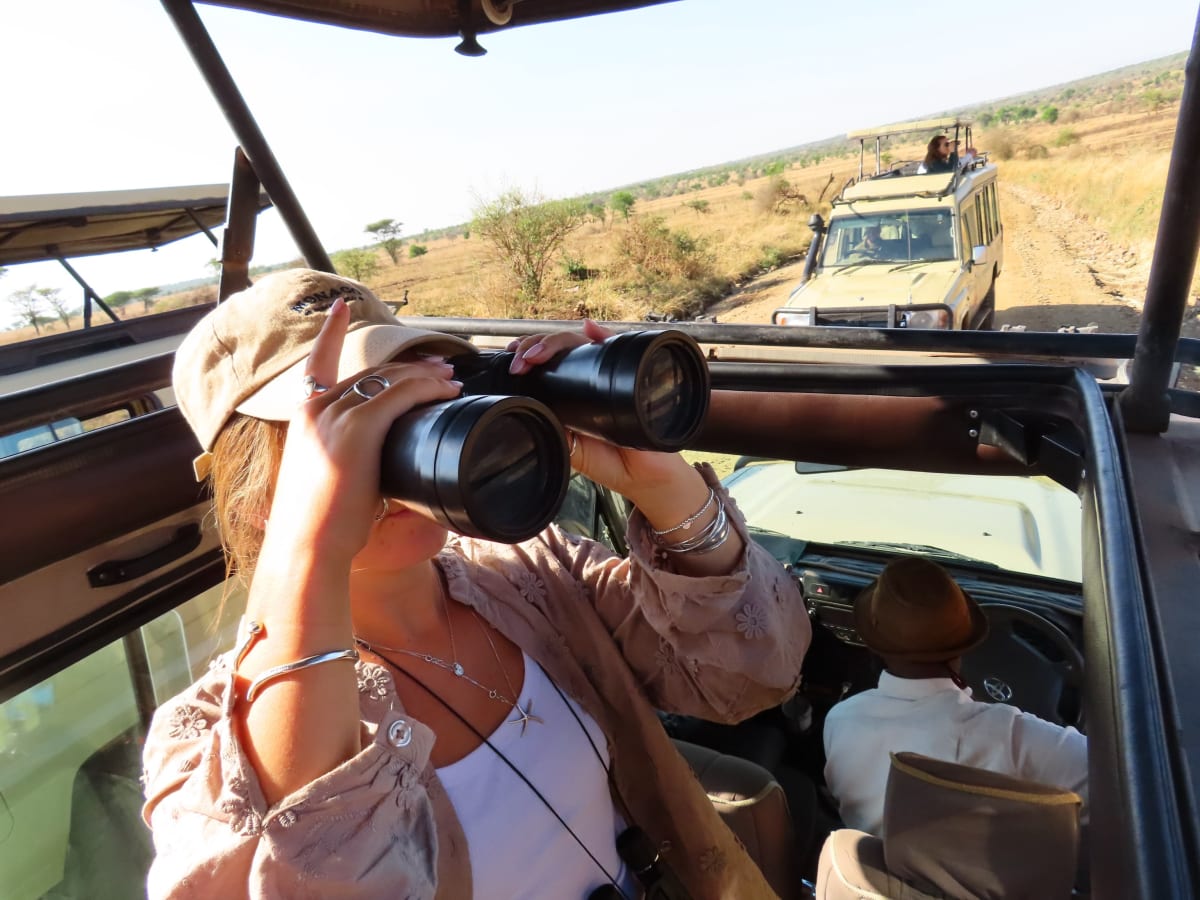
Light and simple. Closed shoes, a hat, sunscreen, water, neutral clothes and a small camera. Binoculars help with birds. A light rain jacket is wise in the wet months. Leave bright colours and perfume at the lodge, and keep your camera strap short. Rangers carry what is needed for safety. Do not bring food that could attract animals. Read what to pack for a safari for the wider list.
Who Is the Rhino Visit Best For?
Ideal para
- Visitors who want a close, safe walking encounter with large wildlife
- Families, older travellers and conservation-minded guests
- Travellers heading to Murchison Falls who want a stop on the way
Puede no ser ideal para
- Travellers who expect to see wild rhinos in an open national park
- Anyone with only a short stay in Kampala and no northern route
Will Rhinos Return to the National Parks?
That is the long-term goal of the project. As the population at Ziwa grows, young rhinos can be moved to the national parks once security, habitat and funding are in place. Murchison Falls and Kidepo, where rhinos once lived, are the most discussed sites. The timetable depends on protection and on the size of the founding group, so it will take years. Visiting Ziwa now supports that plan, and it lets you see the animals that may one day roam the parks again.
¿Qué errores cometen los visitantes?
- Expecting a free-roaming experience. The animals live in a fenced sanctuary.
- Arriving at midday. The heat sends the rhinos into thick shade.
- Skipping binoculars. Birds and distant animals are worth a closer look.
- Not booking ahead. Slots are limited in busy months.
Frequently Asked Questions About Rhinos in Uganda
Are there black rhinos in Uganda?
Not at present. The rhinos at Ziwa are southern white rhinos.
Is rhino tracking safe?
Yes, with armed rangers and a briefing. Follow the instructions and keep to the group.
Can I see rhinos in Murchison Falls?
No. The rhinos are in the sanctuary, and the park is a two to three hour drive further north.
How long should I allow?
Three hours including the briefing and walk, and more if you add a bird walk.
How close do you get to the rhinos?
Rangers decide on the day, often within a few metres, and the group stays together and quiet.
Do I need a permit in advance?
Booking ahead is advised for busy months. We arrange it with your itinerary.
¿Planificando tu viaje?
Tell us your dates and whether you head north, and we will place Ziwa in the best part of the route. Talk to Our Tour Specialist, or see the Uganda destination page.