Las mejores cosas que hacer en el Parque Nacional Queen Elizabeth son un safari en las llanuras de Kasenyi, un crucero en barco por el Canal Kazinga, una mañana entre los higuerones de Ishasha y una caminata por el desfiladero de Kyambura. Alrededor se encuentran lagos de cráter, un lago salado, observación de aves y visitas a aldeas. El parque es uno de los más variados de Uganda, con sabana, bosque, humedales y agua a poca distancia en coche, con los Montes Rwenzori al fondo.
Esta guía describe cada actividad, su duración y a quién le conviene, y luego muestra cómo combinarlas en dos o tres días.
¿Por qué el Parque Nacional Queen Elizabeth es tan variado?
El parque se encuentra entre el lago George y el lago Edward, unidos por el Canal Kazinga, una vía fluvial natural de unos 32 kilómetros de longitud. A ambos lados hay llanuras abiertas, bosques de acacia, pantanos de papiro, lagos de cráter y los bosques de Kyambura y Maramagambo. Esta combinación genera numerosos hábitats, y explica las extensas listas de mamíferos y aves del parque, con más de 600 especies de aves registradas. La cordillera de los Rwenzori se eleva más allá del parque, a menudo oculta entre las nubes, y se vislumbra en el aire claro de la mañana.
¿Cómo es un safari aquí?
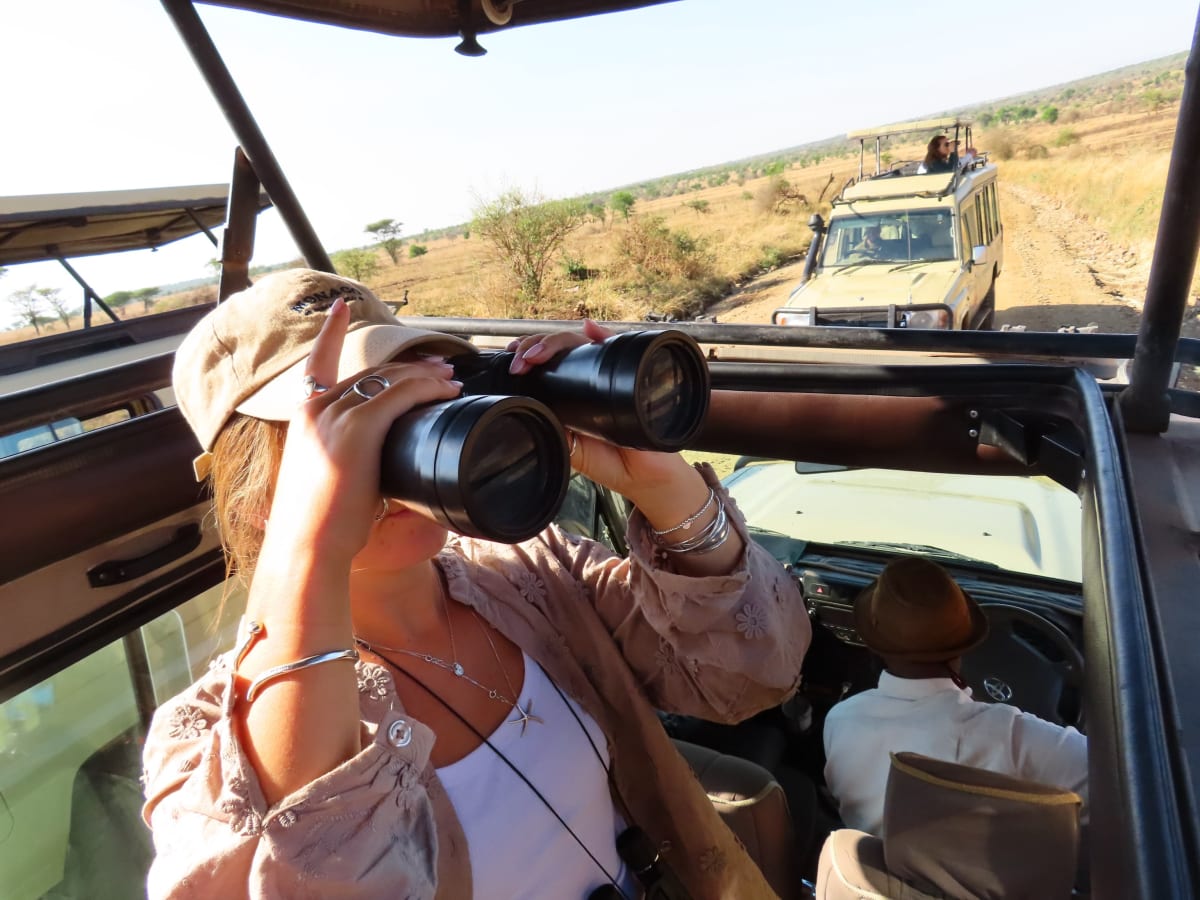
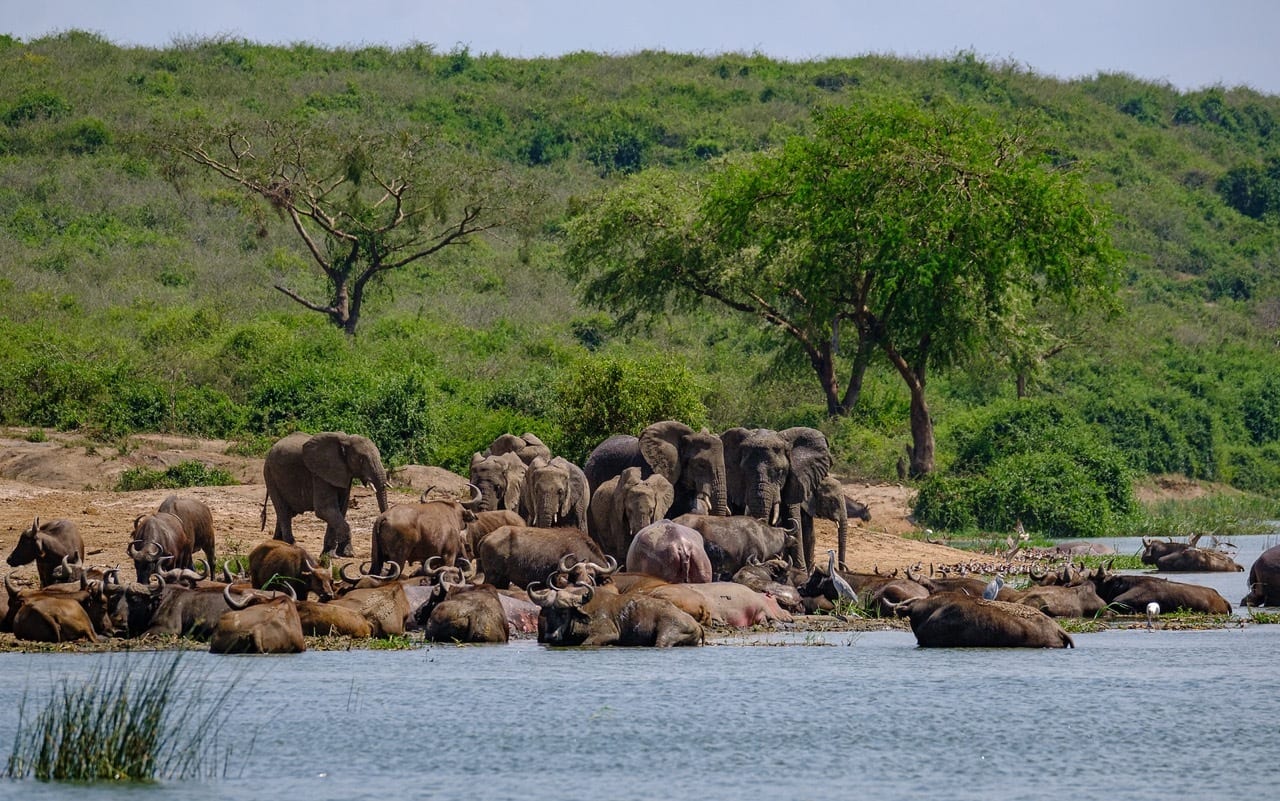
Un safari en Queen Elizabeth es un paseo lento con un guía por la zona abierta. Las llanuras de Kasenyi al norte son conocidas por el kob de Uganda, que es una presa favorita de los leones, y por búfalos, elefantes y facoceros. La península de Mweya y la ribera del canal añaden hipopótamos, antílopes acuáticos y muchas aves. La madrugada y la tarde tardía son los mejores momentos. Un recorrido dura de dos a cuatro horas, y muchos visitantes hacen dos en un día.
Los leones, leopardos e hienas son posibles, y los avistamientos dependen de la suerte y la paciencia. Lea Queen Elizabeth vs Murchison Falls para ver cómo el parque se compara con otras grandes áreas de caza de Uganda.
¿Vale la pena el crucero en barco por el Canal Kazinga?
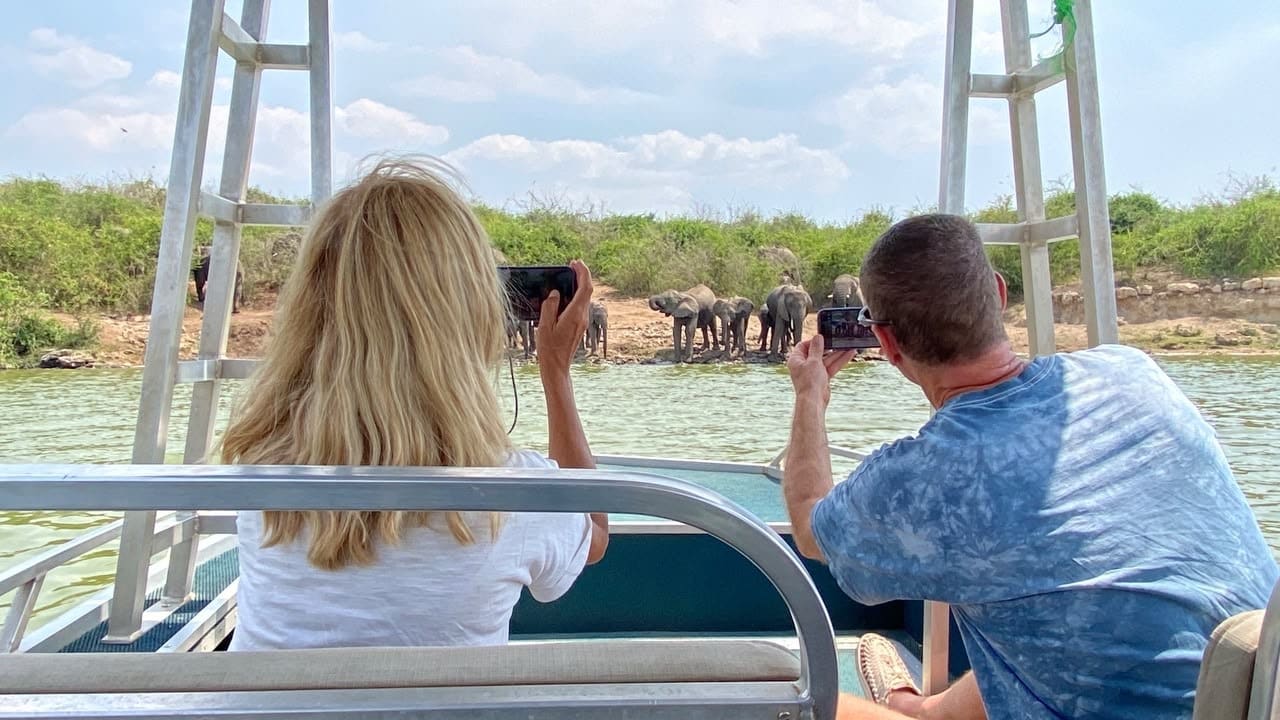
Yes, it is the most popular activity, and for good reason. The boat moves slowly along the channel, close to the shore, so you see hippos in the water, buffalo and elephants coming down to drink, crocodiles on the banks and many species of birds. The cruise lasts about two hours, in a boat with a roof, and a guide explains what you see. It is a calm activity that suits almost everyone. Read whether the Kazinga Channel cruise is suitable for families for the details.

Can You Really See Tree-Climbing Lions?
The Ishasha sector in the south is known for lions that climb into fig trees to rest. They are seen on some days and not on others, so go with open expectations. A game drive in Ishasha takes you through open savanna and groves of fig trees, with Uganda kob, topi and elephants on the way. It is a natural stop between Queen Elizabeth and Bwindi. Many visitors sleep nearby and drive in the early morning. The 6-day Ishasha, boat safari and chimp tracking tour is built around this stretch.
What About Chimpanzee Tracking in Kyambura Gorge?
Kyambura Gorge is a steep, forested valley that cuts through the savanna. A guided walk takes you down into the trees, with a chance of finding the resident chimpanzees as well as monkeys and birds. The walk goes down and up, and it can be muddy and tiring. Sightings are not consistent, and it is best treated as a scenic forest morning with a chimpanzee possibility. For a more reliable encounter, Kibale is the better choice. Read is Kibale the best place for chimpanzee tracking in Uganda.
What Else Is There to See in the Park?
Around the main activities sit several quieter experiences that fill an afternoon:
- Crater lakes. The Katwe area has volcanic crater lakes and a drive along the rim gives wide views, with flamingos in some seasons.
- Lake Katwe salt works. Local workers extract salt from the lake by hand, and a guided visit explains the work and its history.
- Birding. Papyrus, forest, savanna and lake each hold different species. A guide can take you to the best spots on a morning walk or drive.
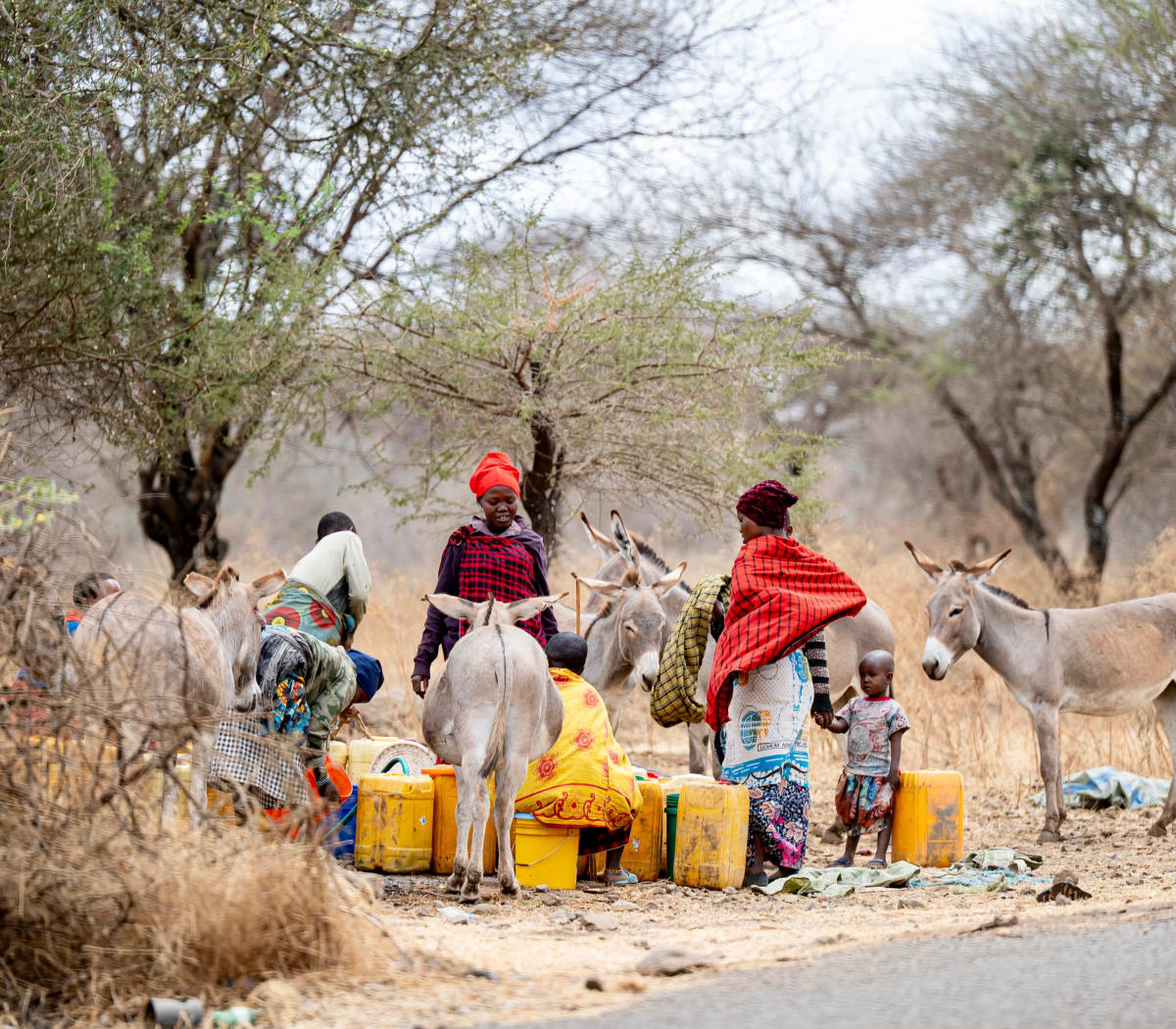
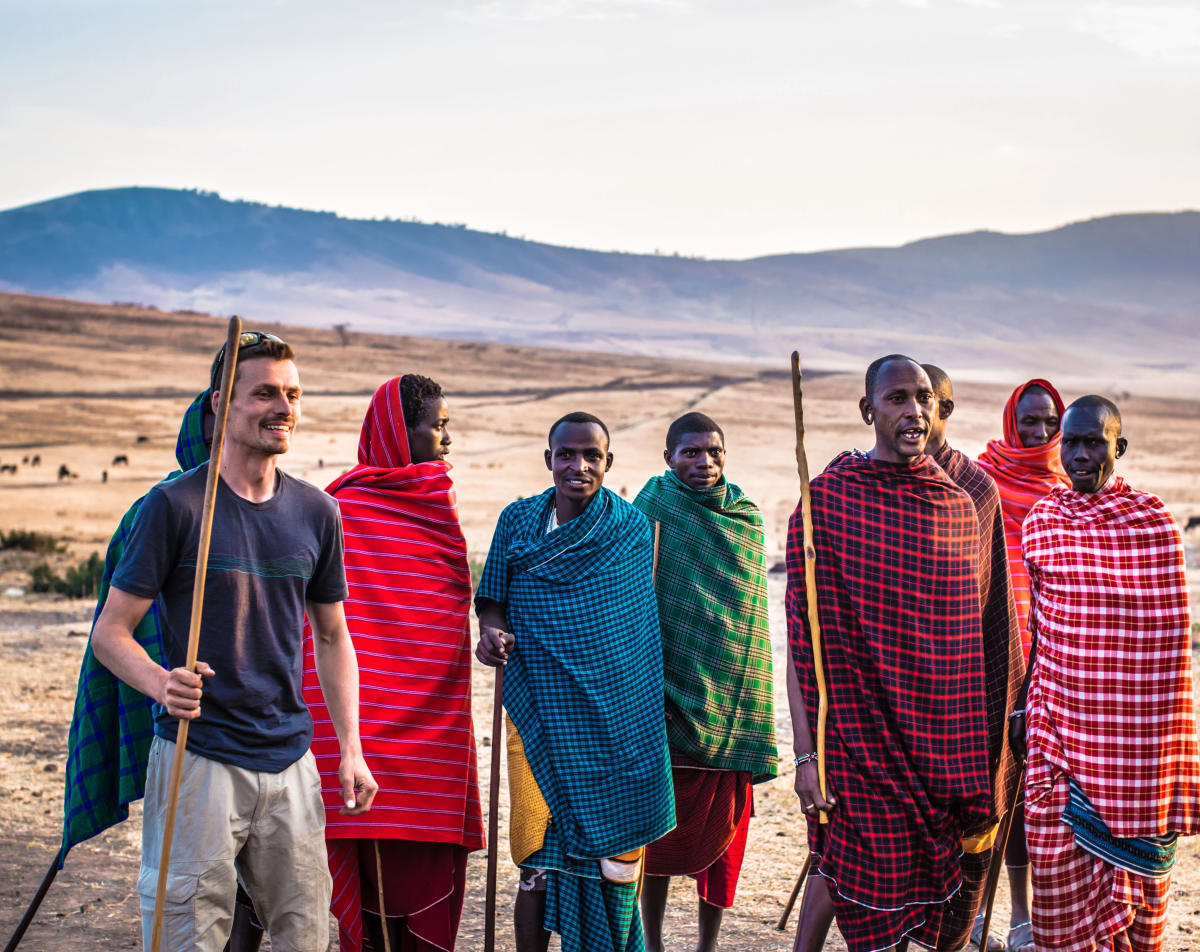
- Village and community visits. Walks with local hosts show farming, crafts and food, and they spread the benefit of tourism beyond the lodge.
- The equator. A marker on the road near Kasese lets you stand on the equator, which is an easy photo stop on the way in or out.
These work well on the day of arrival or departure, when you want to see something without a long outing.
What Does a Good Two-Day Plan Look Like?
Here is a simple plan for two nights in the park:
- Day one, afternoon. Arrive and take a short game drive on the Kasenyi plains.
- Day two, morning. A longer game drive at dawn, then breakfast and a rest.
- Day two, afternoon. The Kazinga Channel boat cruise, followed by an easy evening.
- Day three, morning. Drive south through Ishasha toward Bwindi or north toward Kibale, with a stop for lions.
With a third night, add Kyambura Gorge on the morning of day three, and keep the crater lakes for the last afternoon. The plan gives you a mix of fast and slow days and avoids the common mistake of packing every activity into a single day.
How Many Days Should You Spend in the Park?
Two nights is the practical minimum, and it allows a late-afternoon game drive, a morning drive or Ishasha visit, and the boat cruise. Three nights let you add Kyambura Gorge, a crater lake drive and a cultural visit without hurrying. Because the park sits in the middle of the western route, many travellers do two nights here as part of a longer trip. See the 10-day Uganda primates and wildlife expedition or the 8-day chimpanzee, big game and shoebill safari.
Who Will Enjoy Queen Elizabeth National Park Most?
Ideal para
- First-time safari visitors who want variety in one park
- Families and older travellers who prefer easy activities
- Birders and photographers
Puede no ser ideal para
- Visitors who want dense predator sightings every day
- Travellers who only have one night
How Do You Respect Wildlife and Local People in the Park?
Keep to the tracks and follow your guide. Never get out of the vehicle without permission, and keep your voice low near animals. Do not feed monkeys or baboons, which become aggressive and sometimes dangerous. Dispose of rubbish properly. Around the park live fishing communities and farmers, and their villages are part of the landscape. Ask before photographing people, and buy crafts and food from local sellers. Responsible visitors help the park earn the support of its neighbours, which is the best protection for wildlife.
What Should You Pack for the Park?
Light neutral clothing, a hat, sunscreen, a fleece for the morning, comfortable closed shoes and a rain jacket. Binoculars and a camera are essential for the boat and the drives. Insect repellent protects against mosquitoes and tsetse flies, and a scarf helps against dust. Bring a small daypack for the vehicle. Read what to pack for a safari for a full list, and whether the Kazinga Channel cruise is suitable for families if you travel with children.
What Is the Best Time of Day for Each Activity?
Game drives are best at dawn and in the late afternoon, when animals are active and the light is soft. The boat cruise works at any hour, with the afternoon departure popular for warm light on the shore. Kyambura Gorge walks start in the morning, before the heat. Crater lake drives and village visits suit the middle of the day, when wildlife is resting. Planning around these rhythms gives you the best of each activity and keeps the heat of midday for a rest by the pool.
What Mistakes Do Visitors Make in the Park?
- Booking one night. It leaves no time for the boat and a drive.
- Expecting lions on schedule. The park rewards patience.
- Skipping binoculars. Birds and distant animals are worth seeing closely.
- Leaving the boat cruise too late. It is popular, so reserve a time slot.
Frequently Asked Questions About Queen Elizabeth National Park
How long is the boat cruise?
Around two hours, in the morning or afternoon.
Is it possible to walk in the park?
Guided walks are available in certain areas, such as Kyambura Gorge and the crater lakes. Ask your guide.
¿Necesito un 4x4?
Yes. A 4x4 vehicle with a driver guide is the best way to move around the tracks.
What is the best month?
Read the best time to visit Queen Elizabeth National Park for a month-by-month view.
¿Planificando tu viaje?
Tell us your dates and who is travelling, and we will build the days in the park around the activities you choose. Talk to Our Tour Specialist, or browse the game drives page.