The Kibale chimpanzee tracking cost for an international visitor is currently about US$250 for the standard tracking permit and about US$300 for the full-day habituation experience. Those two numbers are only the start. Kibale is a long drive from Kampala, so the permit is usually one line in a budget that also includes a driver, a night or two near Fort Portal and any other activity you add.
This guide explains what the permit buys, what the habituation experience adds, and how the rest of the budget builds up. Permit prices are reviewed from time to time and were checked in October 2026, so we confirm the figure in writing before you pay.
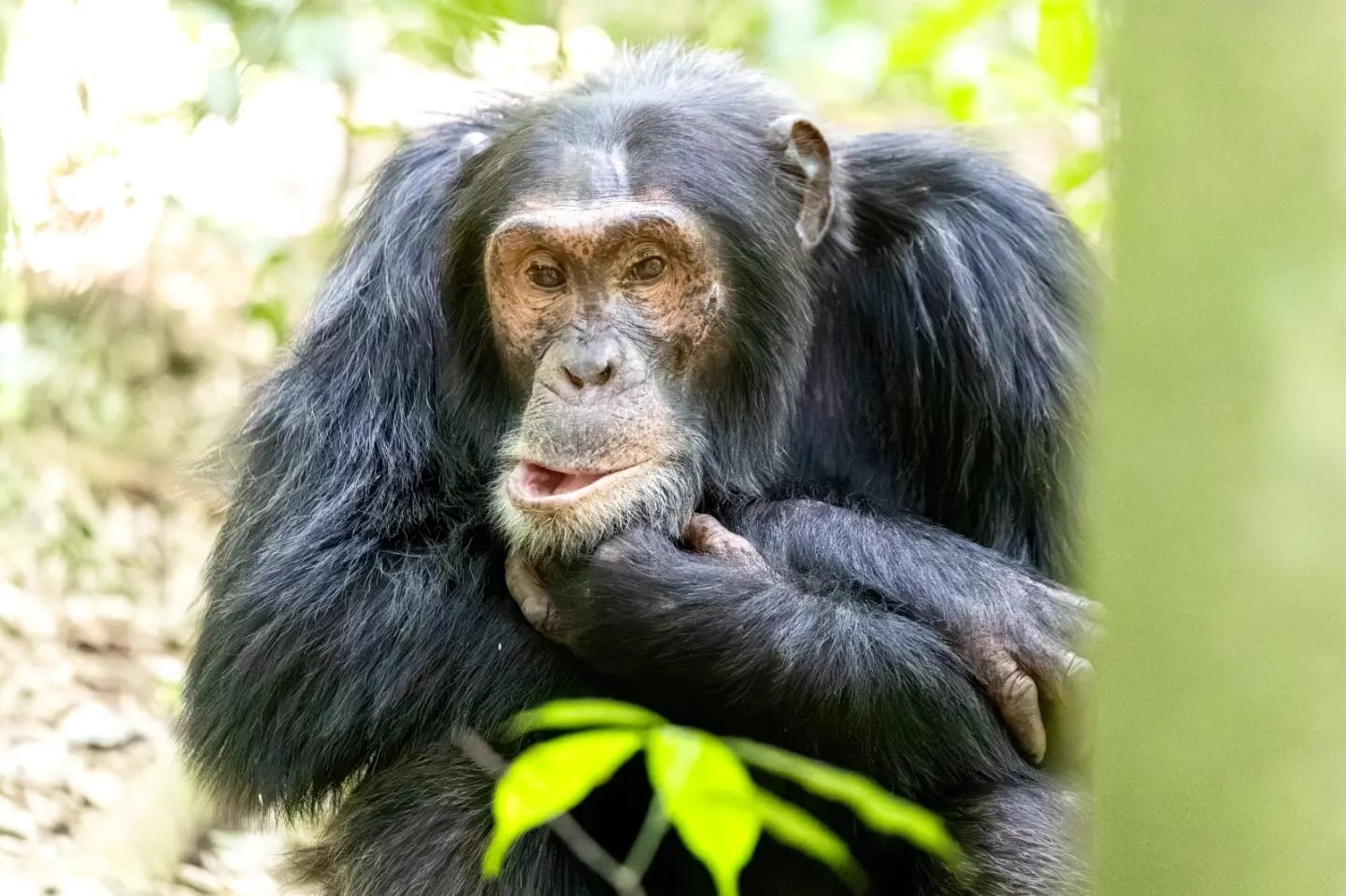
What Does the Standard Tracking Permit Include?
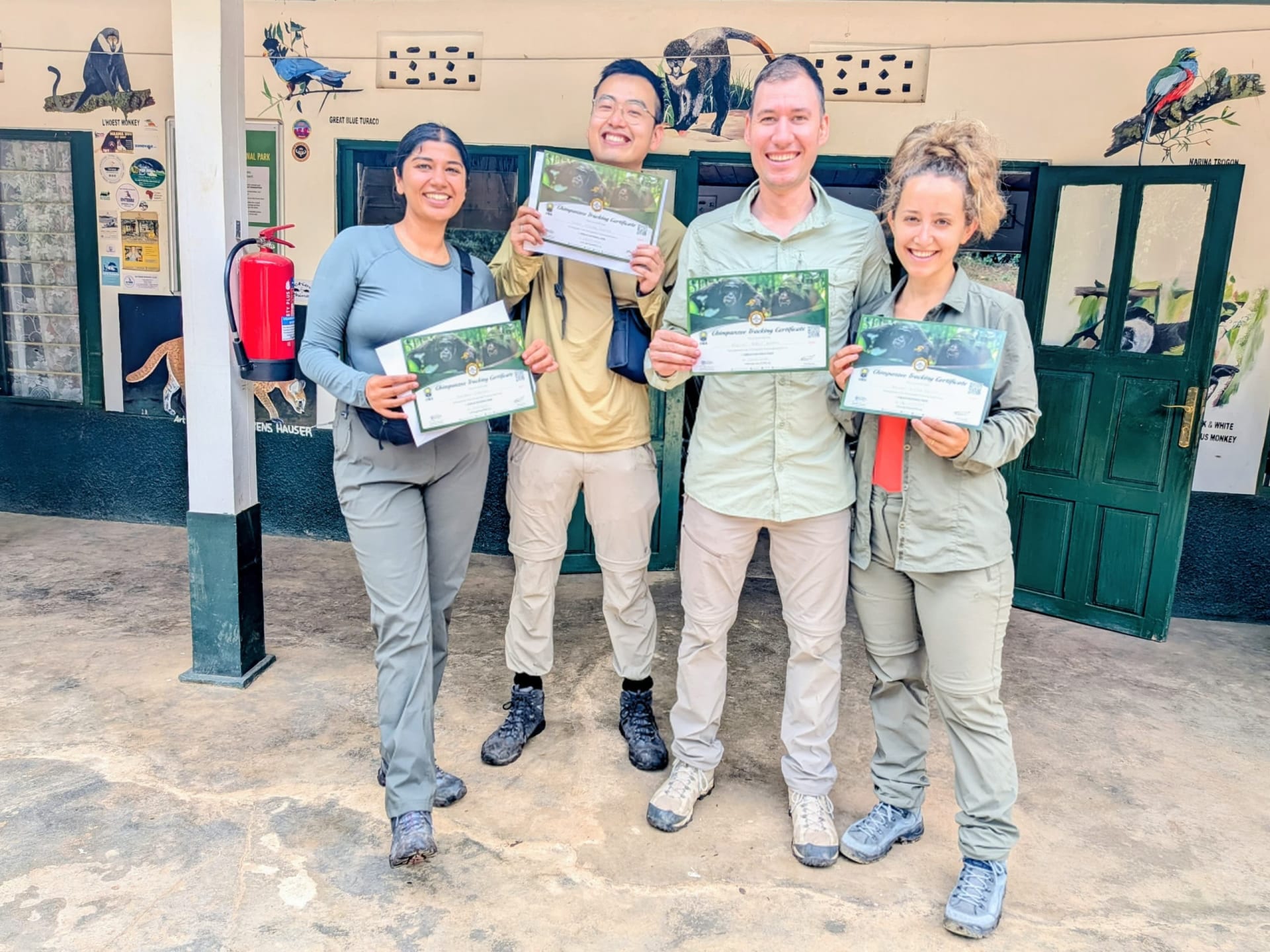
The permit gives you a place in a small group, led by a ranger guide, to look for a habituated chimpanzee community in Kibale National Park. Groups are small, usually up to six visitors for each community, and you must be at least 12 years old. Tracking sessions run in the morning and the afternoon. The search can take anywhere from a few minutes to several hours, because the chimpanzees move through the forest, and once you find them you have one hour with the group.
Kibale is known for its density of primates: it protects thirteen species and a large chimpanzee population, which is why the chance of an encounter is high, though never a promise. Read our guide to chimpanzee tracking in Uganda for how Kibale compares with Kyambura, Kalinzu and Budongo.
How Much Does the Habituation Experience Cost, and Why Is It Higher?
The habituation experience costs about US$300 per person for international visitors, which is US$50 more than tracking. The price reflects what you get: instead of one hour with a chimpanzee group, you join the researchers and trackers from early morning and stay with a community that is still learning to accept people, for up to about four hours with the animals. You see more behaviour, such as feeding, grooming and movement, and you learn how habituation works.
It takes most of the day, and the walking can be longer and harder than standard tracking. Because the numbers are limited, it should be booked early. If you want to compare the two experiences carefully, read the difference in our 5-day Uganda chimpanzee habituation experience, a Signature Journey built around the full-day option.
What Else Goes Into the Total Cost?
Getting to Kibale
Kibale is near Fort Portal in western Uganda. From Kampala or Entebbe it is about five to six hours by road, depending on traffic through Mubende and Fort Portal. Private transport with a driver is the largest travel cost after lodging, and a small group shares it. If you add Queen Elizabeth National Park, Kibale sits conveniently between Kampala and the park, so the same vehicle covers both.
Lodging near the forest
Accommodation around Kibale ranges from simple guesthouses to lodges on crater lakes. A mid-range lodge for two nights will cost more than the tracking permit for several people. Choose a place near Kanyanchu, where tracking begins, or in the crater lake district, which has beautiful scenery but adds a longer drive on the morning. Lodge rates rise in the dry months, and they fall from March to May and in October and November.
Other activities in the area
Most visitors add a second activity. The Bigodi Wetland Sanctuary has a community walk with birds and monkeys. Crater lake walks and village visits fill the afternoon. For a wider route, see the 6-day Uganda chimpanzee tracking and Kazinga Channel safari or the longer 10-day Uganda primates and wildlife expedition.
How Does Kibale Compare With Other Chimpanzee Sites on Cost?
Kibale is not the cheapest place to see chimpanzees. Kyambura Gorge and other sites can cost less for the permit, and Rwanda's Nyungwe has a different price scale. What you pay for in Kibale is the quality and the odds: a large, habituated population and consistent sightings. For most visitors, that makes the extra cost reasonable. Read how much chimpanzee trekking in Rwanda costs to compare, and whether Kibale is the best place for chimpanzee tracking in Uganda.
Is Kibale Chimpanzee Tracking Worth the Price?
For most visitors, yes, with one condition: that you treat it as a morning in a living forest, not as a guaranteed show. You pay for a ranger guide who reads signs in the undergrowth, a small group, a managed hour with wild primates and a forest that shelters a rich mix of monkeys, birds and butterflies on the way. The standard permit costs far less than the mountain gorilla permits of Rwanda or Uganda, and the physical effort is lower for most people. Many travellers who find the gorilla price too high choose chimpanzees instead and are delighted.
What makes the money feel well spent is the planning around the hour. A rested group, a well-placed lodge, a guide who explains what you are seeing and a day with no rush all raise the value of the permit. A rushed day from Kampala with a heavy drive on either side lowers it.
How Do Group Size and Residency Change the Price?
The permit price does not fall when more people join, because it is charged per person. What group size changes is the shared cost of the vehicle, the driver and the lodge room. Two travellers sharing a vehicle pay more per person than four. A solo traveller pays the full cost of the trip alone, so joining a small group often makes the budget far more comfortable.
Residency matters for the permit itself. Visitors who live in East Africa, and foreign residents with the right documents, pay lower rates than international visitors who live abroad. If this applies to you, tell us when you enquire and bring proof of residence.
What Does a Two-Day Kibale Stay Look Like?
A simple plan from Kampala shows how the pieces fit:
- Day one. Drive to the Fort Portal area, check in, and take a gentle walk or a village visit.
- Day two. Early breakfast, a briefing at the park and a morning tracking session. Return for lunch and continue to your next stop, or stay a second night for the Bigodi wetland.
This pattern lets you rest after the drive and keeps the tracking morning fresh. If you prefer to see more of western Uganda, the 6-day Ishasha, boat safari and chimp tracking tour links the forest with the savanna and the water.
How Can You Plan a Sensible Budget?
Use this order to avoid surprises:
- Decide whether you want standard tracking or the full-day habituation experience.
- Choose your number of nights near Kibale. Two is the practical minimum from Kampala.
- Decide whether Kibale is a stand-alone stop or part of a longer route through western Uganda.
- Ask for a quote that shows each line: permit, transport, lodging, meals and extras.
Booking through one operator also keeps the permit date aligned with your lodge and your driver, which prevents the most expensive mistake: a permit on a day you cannot reach the forest. When you are ready to compare dates, read the best time for chimpanzee tracking in Kibale.
Who Is Kibale Tracking Best For?
Ideal para
- Travellers who want the highest chance of a chimpanzee encounter in Uganda
- Visitors combining the forest with Queen Elizabeth National Park
- Photographers who want repeated, close sightings
Puede no ser ideal para
- Children under 12, who cannot join
- Travellers who need very short or flat walks
- Anyone with a very tight budget who could choose a lower-cost site
What Mistakes Do Travellers Make When Budgeting?
- Counting the permit only. The drive and the lodge are the bulk of the cost.
- Booking the permit before the route. Fix the lodge and the transfer first, or align them together.
- Forgetting the age limit. Visitors must be at least 12 years old.
- Skipping the second night. A single night leaves no time to recover from the drive.
Frequently Asked Questions About Kibale Chimpanzee Tracking Cost
Do I pay for the permit in advance?
Yes. Permits are paid for in advance, and we handle this when you book, so that the date, the group and the lodge match.
Is the habituation experience worth the extra money?
If you like long forest days and want to see more behaviour, yes. If you prefer a shorter outing, standard tracking is a better fit.
Are there discounts for children or residents?
There are different rates for residents of East Africa and for foreign residents. Tell us your residency status when you ask for a quote.
Is the chimpanzee sighting guaranteed?
No. Chimpanzees are wild animals, though Kibale's high success rate is one reason for its popularity.
¿Planificando tu viaje?
Tell us your dates, the number of people and whether you prefer tracking or the full-day experience, and we will price the whole journey and confirm the current permit rate. Talk to Our Tour Specialist, or explore the Uganda destination page.